

Sapa Night Market is an easy place to visit after a day of trekking, village trips, or sightseeing around town. The market is known for charcoal-grilled food, local textiles, small souvenirs, and the lively street atmosphere that builds after dark.
You do not need a complicated plan. Walk through the market once before ordering, choose a few freshly grilled dishes, and take time to compare the handicraft stalls if you want to buy something. I would treat it as part of an evening in central Sapa rather than one of the main reasons to plan a trip to the region.
The market is most reliable on weekend evenings, but operating days and the number of open stalls can change with the weather, holidays, and local arrangements. If your itinerary depends on visiting, ask your hotel to confirm the schedule on the day.
| Quick information | What to know |
|---|---|
| Location | N1 Street and the Luong Dinh Cua Street area, near Sapa bus station |
| Usual schedule | Friday to Sunday, around 4:00 PM – 10:00 PM |
| Best time to arrive | Around 6:00 PM – 7:00 PM, when most stalls are open but the walkways are not yet at their busiest |
| Time to allow | About 1 – 2 hours; longer if you sit down for hotpot |
| Main reasons to visit | Grilled food, local products, people-watching, and an evening walk |
| Payment | Vietnamese dong in cash is the safest option for small stalls |
Is Sapa Night Market Worth Visiting?
Sapa Night Market is worth visiting if you are already staying in town over the weekend and want a casual place to eat and walk around after dark. It works especially well for travelers who enjoy street food, browsing textiles, taking evening photos, or watching everyday activity around a busy market.
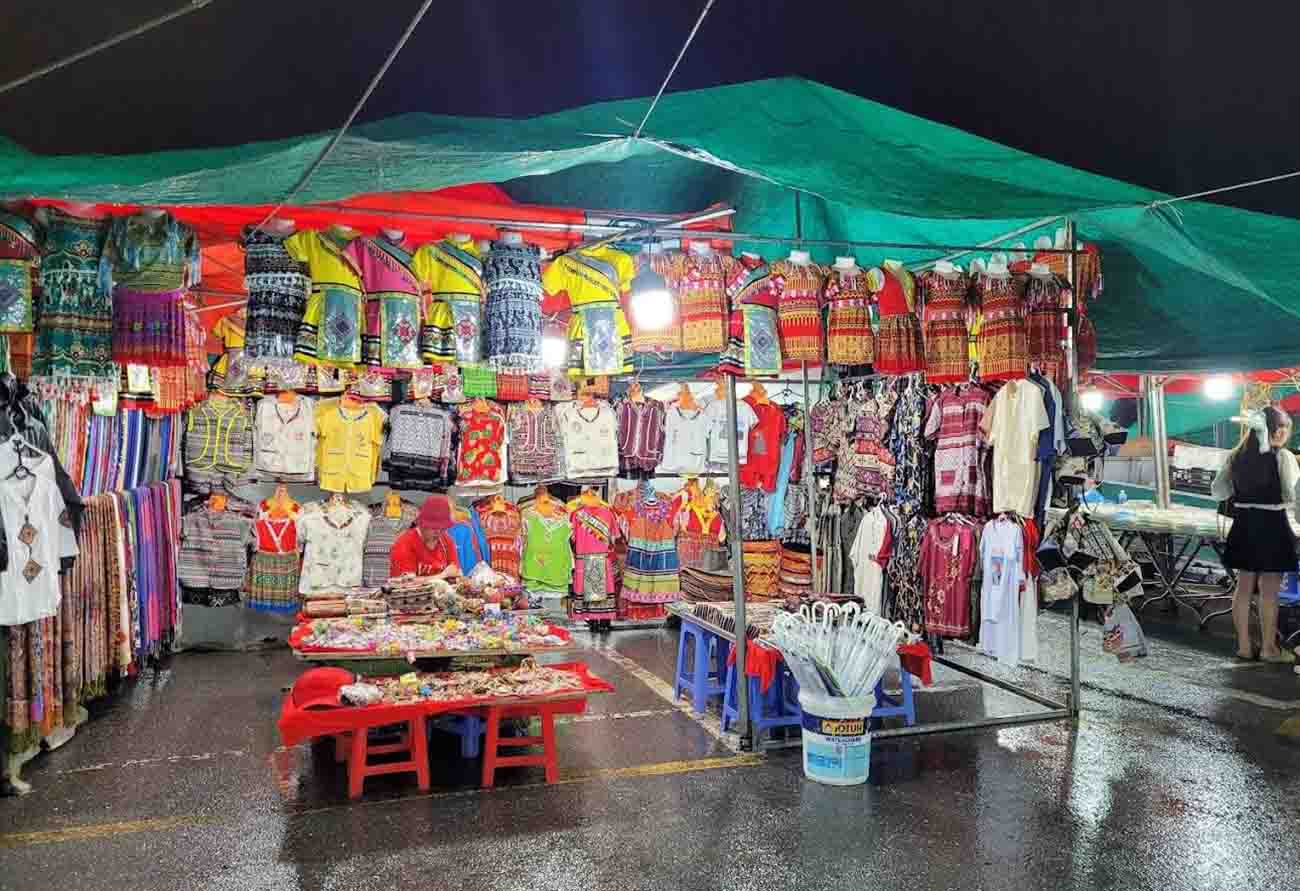
The first thing you are likely to notice is the smoke from the charcoal grills. Vendors cook meat, vegetables, tofu, corn, and sweet potatoes in front of customers, often beside simple tables and low plastic stools. On a cold evening, stopping near the grill for something hot is part of the experience.
The market can also feel crowded, smoky, and noisy. People stop in narrow sections of the walkway, vendors call out to passing customers, and the busiest food stalls fill quickly. Travelers hoping for a quiet mountain evening may prefer dinner at a lodge, a small restaurant, or a café away from the center.
I would not describe the market as a major attraction on the same level as Fansipan, Muong Hoa Valley, or a village trek. It is a smaller, simpler experience. If you keep that expectation in mind, spending an hour or two here can be an enjoyable way to end the day.
What the Market Is Really Like
The setup is basic. Expect temporary covers, open grills, simple tables, plastic stools, souvenir displays, and a compact space shared by locals and visitors. It does not feel like a polished shopping complex or one of the large night markets found in major Asian cities.
Food and souvenirs make up most of the market. You may also see small cultural performances around the wider town-center area on busy weekend evenings, but they are not guaranteed every night. If a performance matters to you, check the local schedule rather than planning your evening around it.
Sapa Night Market and the Daytime Market Are Different
The daytime Sapa Market is more practical. It sells produce, meat, household goods, clothing, and items used by local residents. Trading is usually more active in the morning.
The night market is more visitor-oriented, with cooked food, souvenirs, textiles, and people spending time outside after dark. Visiting one does not make the other unnecessary because the atmosphere and the products are different.
- Don’t miss: 12 Best things to do in Sapa
Sapa Night Market Location and Opening Hours
Where Is Sapa Night Market?
Sapa Night Market is held around N1 Street and Luong Dinh Cua Street, near the bus station and the Lao Cai tourism information area. From Sapa Stone Church, the central square, or Sun Plaza, most travelers can walk there in about 10 – 15 minutes, depending on their starting point and pace.
The streets in central Sapa can look different after dark, especially in fog. Save the market on your phone before leaving or ask your hotel reception to point out the easiest route.
What Time Does Sapa Night Market Open?
The commonly published schedule is Friday, Saturday, and Sunday from around 4:00 PM to 10:00 PM. Some stalls may start later, close earlier in bad weather, or continue beyond 10:00 PM when the town is busy.
I would still plan around the 10:00 PM closing time. Arriving late can mean finding fewer food choices and vendors already packing up.
Travelers sometimes find conflicting opening information online because smaller food and souvenir stalls operate elsewhere in central Sapa on other evenings. The weekend market on N1 Street is the one covered in this guide. Local schedules can change, so a quick confirmation from your accommodation is sensible if you are visiting outside Friday to Sunday.
What Is the Best Time to Visit?
The market feels different throughout the evening:
- 4:00 PM – 6:00 PM: Quieter, with some vendors still setting up. This period is better for browsing, but not every stall may be ready.
- 6:00 PM – 8:00 PM: The most practical time for most visitors. The grills are running, more stalls are open, and the market has a lively atmosphere.
- After 8:00 PM: Usually busier on Saturdays, holidays, and clear-weather weekends. Moving through the food area can take longer.
If I wanted food and atmosphere without the heaviest crowd, I would arrive at around 6:30 PM. For a quieter walk, I would go earlier on Friday or Sunday rather than at the Saturday-evening peak.
Check the Weather Before You Go
The market is outdoors, so rain, fog, and cold weather affect both the experience and the number of vendors. Heavy rain can lead to more plastic covers, wet walkways, fewer stalls, and earlier closing.
Sapa evenings can become cold even when the afternoon feels comfortable. Winter temperatures may fall below 10°C and can occasionally approach 0–5°C during a cold spell. Summer brings heavier rain, especially during the wet season.
Bring a warm layer and a light rain jacket if the forecast is uncertain. Closed shoes with reasonable grip are more useful than slippery sandals when the pavement is wet.
- Also read: Best Time to Visit Sapa
What to Do at Sapa Night Market
Walk Through the Market Before Ordering
The first food stall you see is not necessarily the best one for you. Take a short walk through the market, look at what is being cooked, check the displayed prices, and notice which stalls have steady turnover.
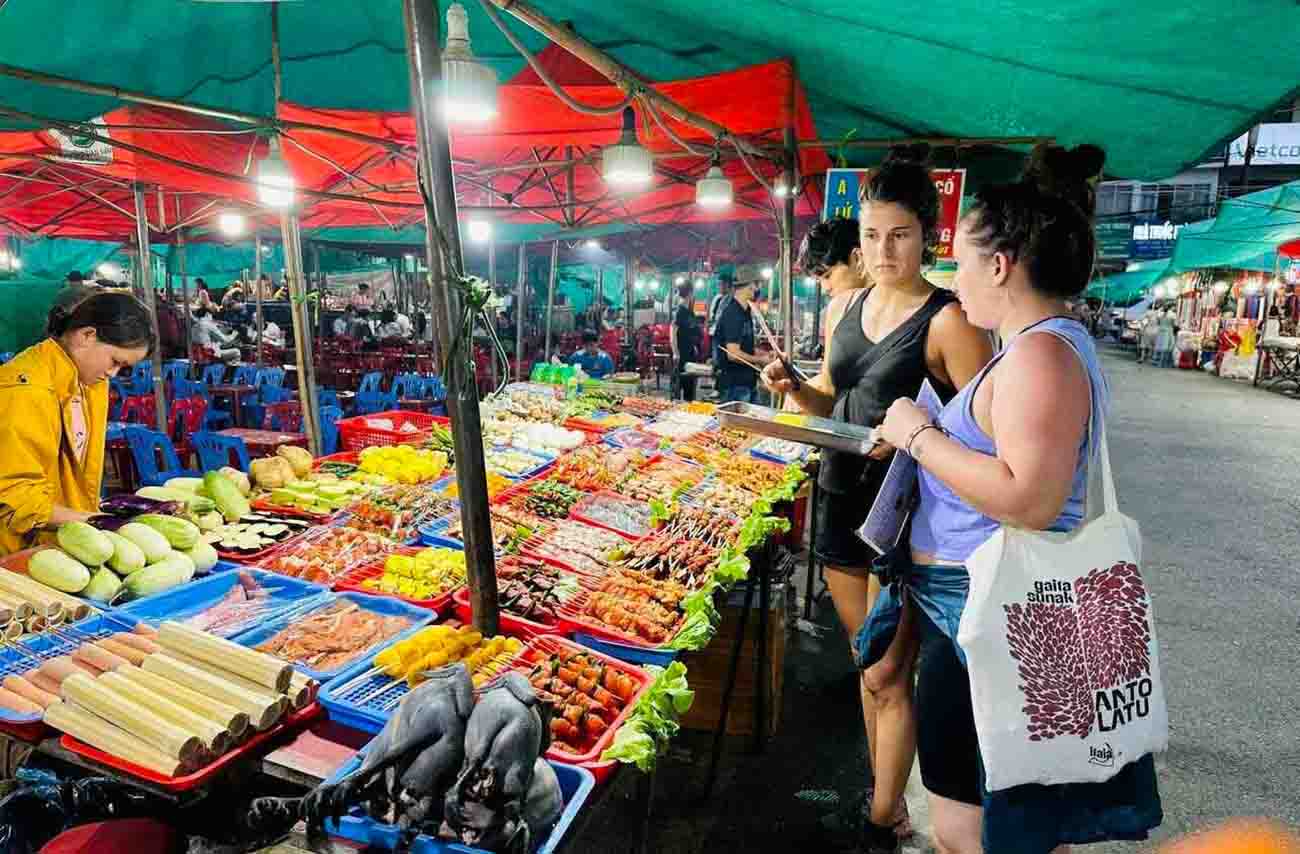
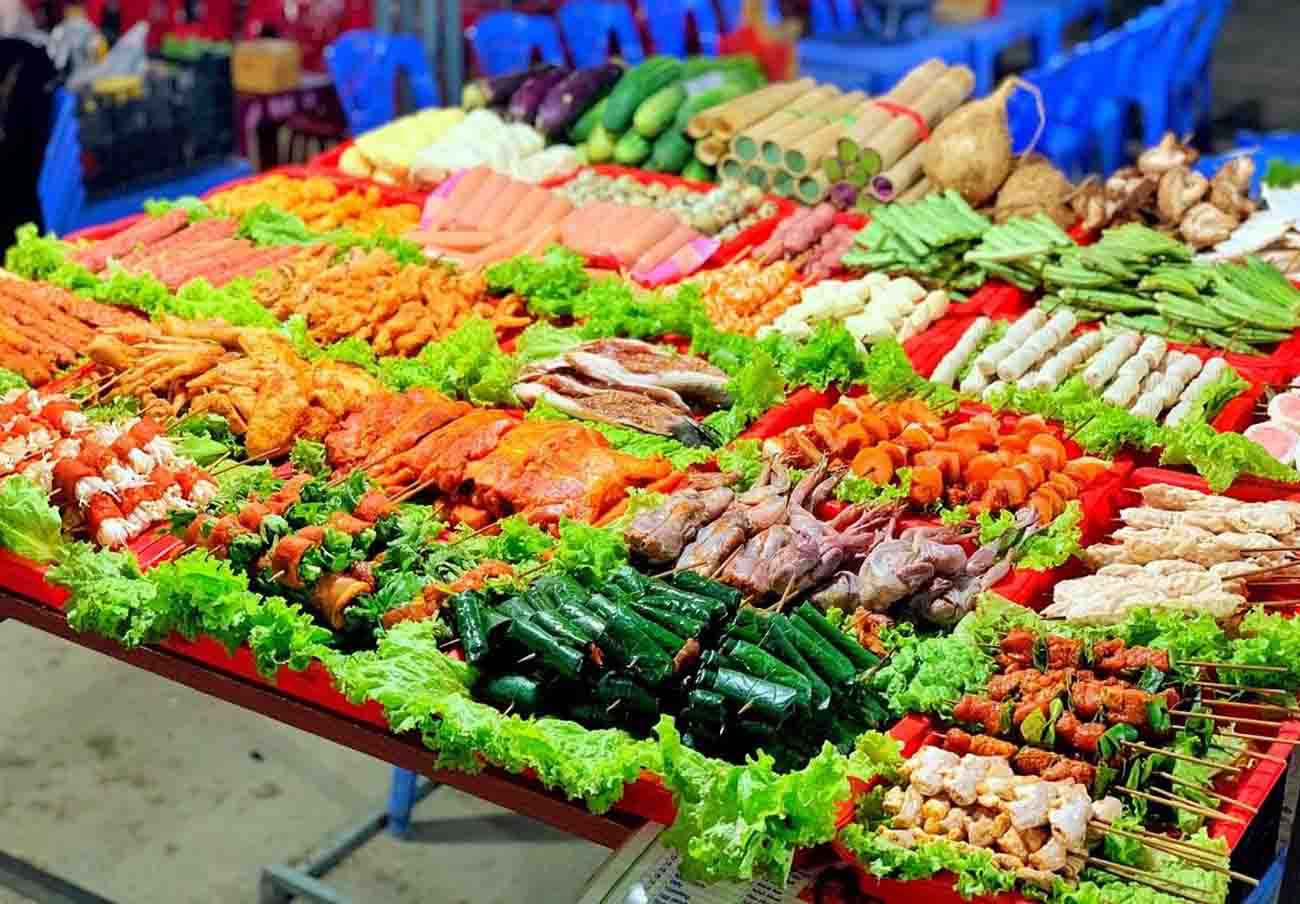
Many barbecue stalls display raw skewers at the front. You choose the ingredients, place them on a tray, and wait while the vendor grills them over charcoal. Walking around first makes it easier to compare the selection and avoid ordering too much at the first stop.
Try a Few Grilled Dishes
Grilled food is the main reason many travelers visit. Depending on the evening, you may find pork, chicken, beef, sausages, mushrooms, tofu, corn, sweet potatoes, and seasonal vegetables.
Rather than starting with a large mixed tray, try two or three items first. Local seasonings such as mắc khén, a fragrant forest pepper with a citrusy and slightly numbing taste, may be unfamiliar. Ordering a small amount lets you decide whether you enjoy the flavor before buying more.
Browse Textiles and Local Products
The souvenir area usually includes embroidered bags, scarves, purses, jewelry, packaged tea, spices, and herbal bath products. Quality varies. Some pieces involve detailed handwork, while others are factory-made items using patterns associated with Hmong or Red Dao textiles.
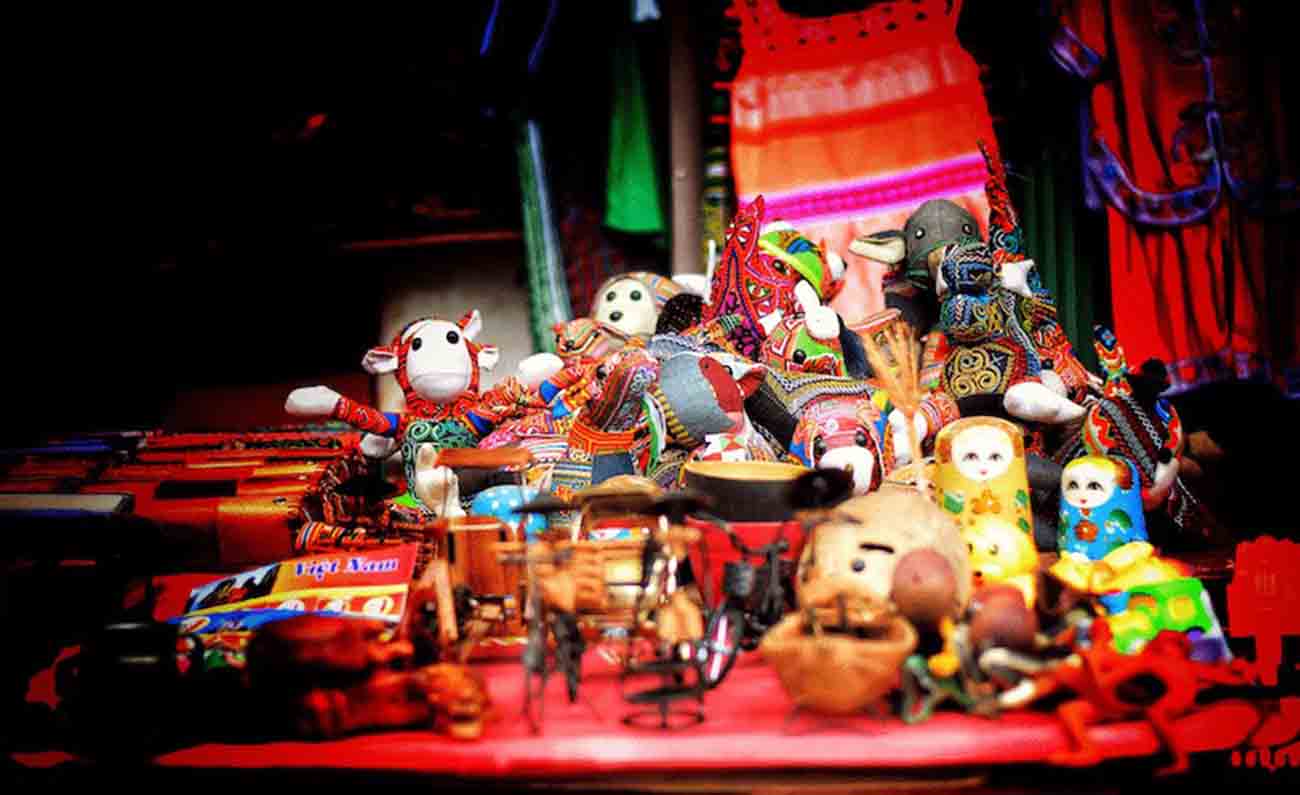
If handmade work matters to you, do not buy solely based on the pattern or the seller’s first description. Look at the fabric and stitching, compare several stalls, and ask where the item was made.
Experience Central Sapa After Dark
Once the grills are running, the market has a different character from Sapa during the day. Bare bulbs and shop signs light the stalls, smoke drifts through the food area, and the colder air makes hot food more appealing.
The wider town center can also be active on weekend evenings. After the market, you can walk back toward the lake, Stone Church, Sun Plaza, or Cau May Street for a drink somewhere quieter.
Talk With Vendors Respectfully
Some Hmong and Red Dao vendors speak conversational English after years of working with international visitors. A simple question about a textile, its material, or where it was made can lead to a useful conversation.
There is no need to treat every interaction as a cultural performance. Sometimes asking a clear question, buying an item you genuinely want, and thanking the seller is enough.
Take Photos With Permission
The combination of colored textiles, charcoal smoke, and evening lights makes the market interesting to photograph. Vendors and local residents are still people going about their work, not part of a staged scene.
Ask before taking a close portrait. A smile and a gesture toward your camera are usually enough when you do not share a language. Buying something does not automatically give permission to photograph the seller.
Be especially careful around children. Do not pay children to pose, give money for photographs, or buy goods simply because a child is selling them. Spending money in these situations can encourage children to remain in tourist-facing street work. A polite refusal is usually the more responsible response.
What to Eat at Sapa Night Market
Grilled Skewers
Grilled skewers are one of the easiest foods to try without sitting down for a full meal. The selection changes from stall to stall, but pork, chicken, beef, sausages, mushrooms, tofu, and vegetables are common.
What separates some Sapa-style barbecue from ordinary grilled food is the seasoning. Mắc khén has a fragrant, citrus-like aroma and a mild numbing sensation. You may also come across chẩm chéo, a dipping mixture commonly made with roasted mắc khén, chili, garlic, salt, and herbs.
Ask for the sauce separately if you prefer mild food. Vendors may also be able to grill plain chicken, pork, tofu, or vegetables with less seasoning.
Cơm Lam
Cơm lam is sticky rice cooked inside a bamboo tube. The rice has a mild flavor and often picks up a light aroma from the bamboo and fire. It is commonly eaten with sesame salt or alongside grilled meat.
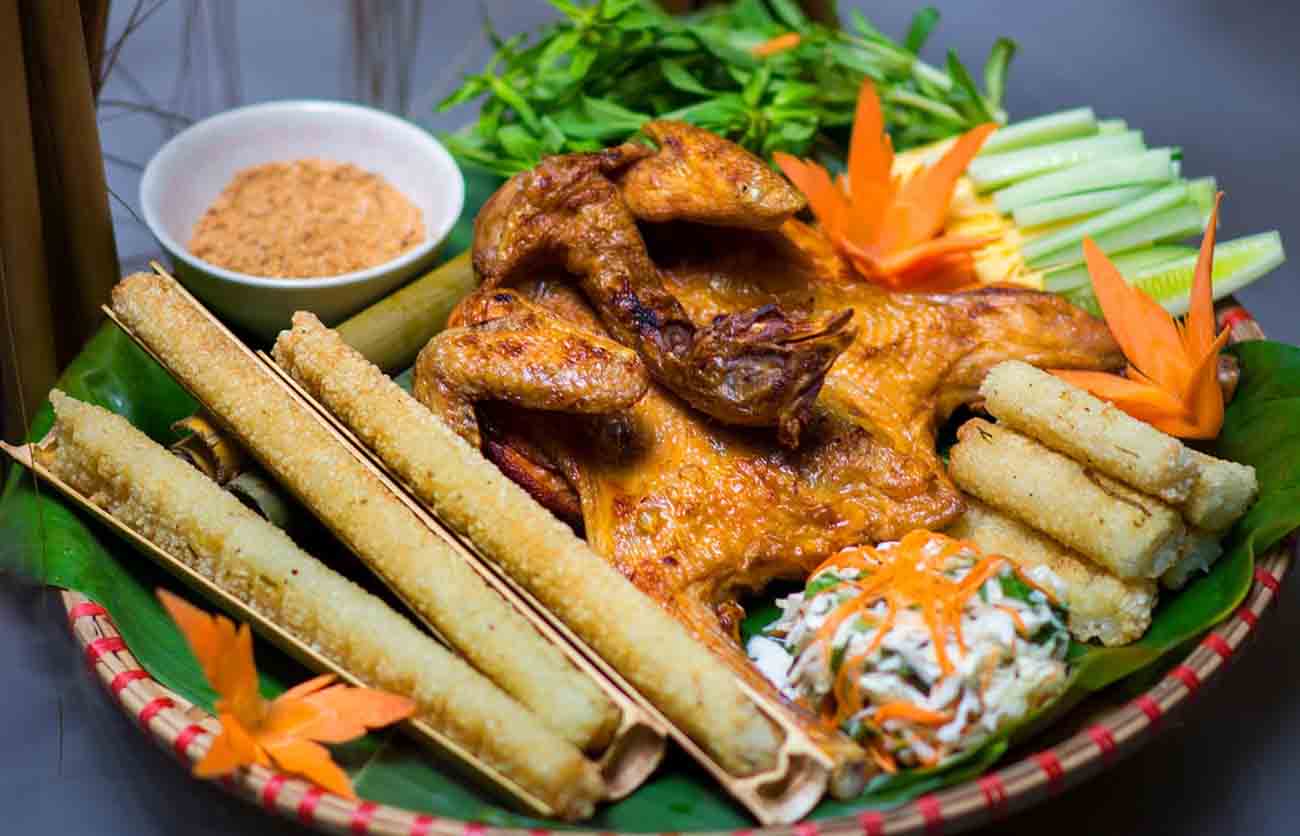
Cơm lam is a useful option if you want something filling without strong spices. It is also easy to share, which helps when you are trying several dishes in one evening.
Corn, Sweet Potatoes, and Chestnuts
Grilled corn and roasted sweet potatoes are straightforward choices for travelers who prefer simple food. They are served hot and are especially enjoyable on a cold or foggy evening.
Fresh roasted chestnuts are more seasonal, while bánh hạt dẻ, a small chestnut-filled cake, is easier to find at different times of year. Availability still varies by stall and season, so do not expect every snack mentioned online to be present on the night you visit.
Smoked Buffalo Meat and Local Sausages
Thịt trâu gác bếp is buffalo meat seasoned and smoked above a wood-burning kitchen fire. The outside becomes dark and dry, while the inside remains fibrous. It is usually softened, pulled apart, and eaten in small pieces.
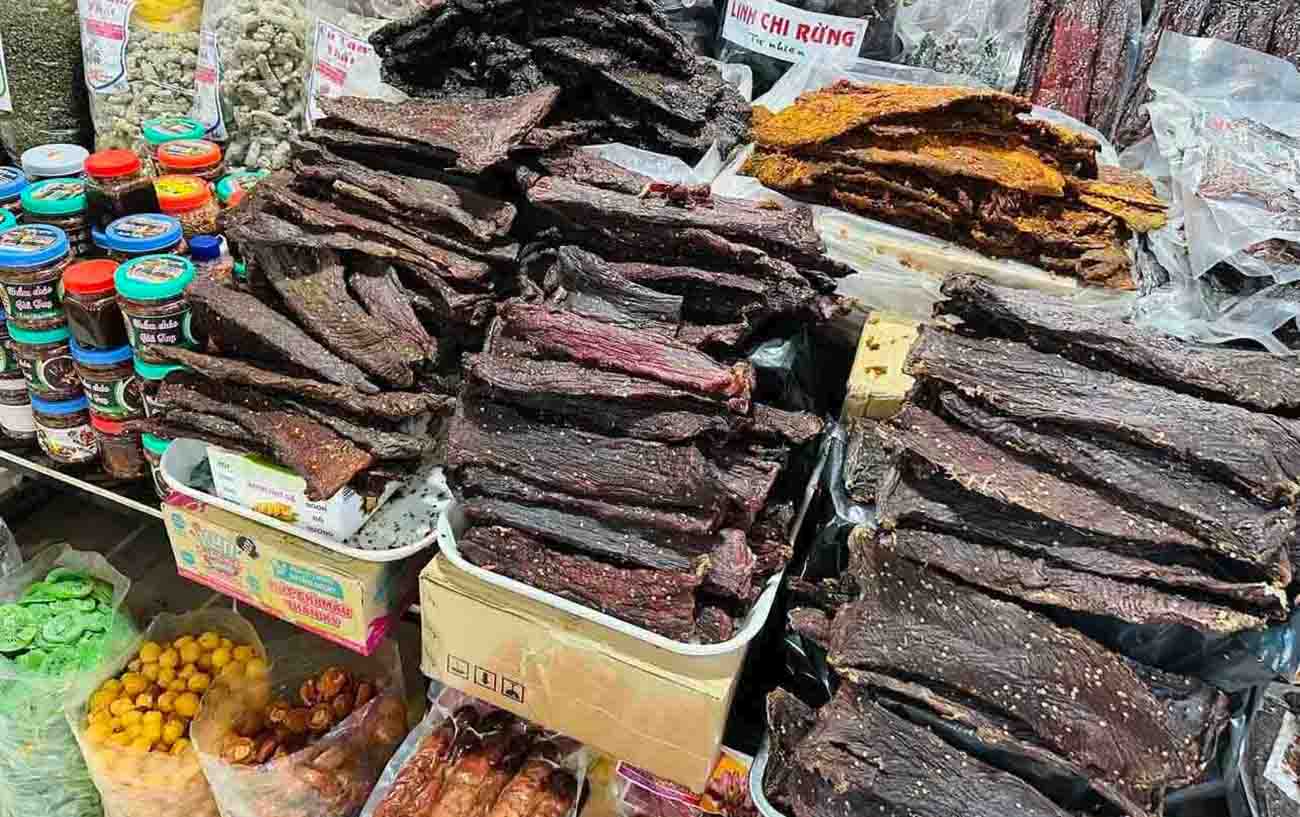
The smoky flavor and firm texture are stronger than an ordinary grilled skewer. Try a small serving first if you are unfamiliar with cured or heavily seasoned meat.
You may also see local-style sausages grilled and sliced for sharing. Ask the price before ordering because portion size can vary.
Salmon or Sturgeon Hotpot
Salmon and sturgeon hotpot are common on restaurant menus around Sapa. The broth is served at the table with fish, tofu, vegetables, and herbs added as you eat.
Hotpot is better for two or more people than for a solo traveler. It also takes longer than eating skewers, so allow extra time and confirm whether the price is for a set, a fish portion, or a rate based on weight.
Not every hotpot restaurant sits inside the market itself. Some are in the surrounding streets, which can be a better choice if you want a proper table and more shelter from cold or rain.
Thắng Cố
Thắng cố is a traditional highland dish associated with Hmong communities. It has historically been prepared with horse meat and offal, cooked for a long time with spices and mountain herbs. Modern versions may use different meat, so ask what is in the pot before ordering.
The flavor and texture are quite different from what many foreign travelers are used to. I would try it only if you are genuinely interested in the dish, not because a generic “must-eat” list says you have to.
Warm Drinks for Cold Evenings
A hot drink can make the market more comfortable when the temperature drops. Depending on the stall or nearby café, you may find ginger tea, hot soy milk, herbal tea, or Vietnamese coffee.
Corn wine and fruit-based local alcohol are also sold in Sapa. If you drink, ask about the strength, avoid unlabelled products of uncertain origin, and do not combine alcohol with riding a motorbike back to your accommodation.
Food Safety Tips for Foreign Travelers
Street food is part of the appeal, but it still makes sense to choose carefully. You do not need to inspect every stall like a food-safety officer. A quick look at how ingredients are stored and cooked can tell you a great deal.
Choose a Stall With Steady Turnover
A busy stall where food is cooked continuously is usually easier to judge than one with ingredients sitting out for a long time. Look for raw meat kept separately from cooked food and, where possible, chilled or stored over ice.
Clean-looking utensils and a reasonably organized preparation area are also useful signs. No street stall will look like a restaurant kitchen, so focus on the basics rather than expecting a perfect setup.
Ask for Food to Be Cooked Fresh
Choose skewers grilled after you order rather than food that has been sitting lukewarm beside the fire. Meat should be cooked through and served hot. If the center is still cold, ask the vendor to return it to the grill.
For hotpot, let the broth return to a proper boil after adding raw ingredients. Use separate chopsticks or tongs for raw food when they are provided.
Keep It Simple If You Have a Sensitive Stomach
Freshly grilled, boiled, or simmered food is generally easier to assess than raw herbs, exposed pre-cut fruit, or sauces that have been standing out for hours. If you are sensitive to unfamiliar food, start with plain rice, corn, sweet potato, tofu, or freshly cooked meat.
Trying a few small portions is usually more sensible than ordering many rich, spicy, and unfamiliar dishes at once.
How to Ask About Ingredients and Allergens
Food allergies require extra care. A busy vendor may not understand a detailed explanation in English, and cross-contact is possible in small kitchens where the same grill, oil, knives, and sauces are used for several dishes.
If you have a serious allergy, show a clearly written Vietnamese message and ask whether the food can be prepared safely. When the answer is uncertain, choose a restaurant with a proper kitchen rather than taking a risk at a street stall.
| Dietary need or allergen | Vietnamese phrase | Meaning |
|---|---|---|
| Peanut allergy | Tôi bị dị ứng đậu phộng và lạc. | I am allergic to peanuts. |
| Seafood allergy | Tôi bị dị ứng hải sản. | I am allergic to seafood. |
| No meat | Không thịt. | No meat. |
| No fish sauce | Không nước mắm. | No fish sauce. |
| Not spicy | Không cay. | Not spicy. |
In northern Vietnam, lạc is a common word for peanuts, while đậu phộng is more widely used in the South. Including both terms reduces the chance of confusion.
Vegetarian travelers should be aware that “no meat” does not always exclude fish sauce, meat broth, or food cooked on the same grill. State each restriction separately if it matters to you.
What to Buy at Sapa Night Market
Handmade Textiles and Embroidery
Textiles are among the most distinctive souvenirs to look for. Traditional Hmong textile work is associated with hemp or cotton fabric, natural indigo dye, batik patterns made with beeswax, and hand embroidery. Red Dao embroidery often uses bright red thread with detailed stitching on clothing and accessories.
At the market, you may see small coin purses, scarves, belts, bags, wall hangings, jackets, and traditional-style outfits. A pouch, scarf, or small embroidered accessory is easier to pack and easier to inspect than a full outfit bought in a hurry.
Jewelry and Accessories
Metal necklaces, earrings, bracelets, and decorative pieces are common. Not everything that looks silver is high-grade silver. Lower-priced items may be made from mixed metal, plated brass, or another silver-colored material.
An inexpensive piece can still be a nice souvenir, but ask what it is made from before paying. For a higher-value purchase, do not rely only on appearance or a verbal claim made during a crowded market interaction.
Tea, Spices, and Herbal Products
You may find Shan Tuyet tea, dried herbs, cardamom, cinnamon, star anise, honey, and Red Dao herbal bath packs. These products are easier to carry than large textiles, but packaging matters.
Choose sealed, clearly labelled products when possible. Check the ingredients, weight, production or packing information, and expiry date. If you are flying internationally, review the customs rules at your destination before buying plant material, loose herbs, honey, or meat products.
Small Gifts That Are Easy to Pack
For limited luggage, look for small items such as embroidered coasters, woven bookmarks, fabric keychains, small wooden utensils, or lightweight textile pouches.
Avoid buying a bulky item simply because it looks attractive under the market lights. Think about how many travel days remain, whether the item can get wet, and whether you have room to protect it in your bag.
How to Tell Handmade Items From Mass-Produced Souvenirs
Not every item using Hmong or Red Dao-inspired patterns was made by hand in a nearby village. Factory-made products can be useful and affordable, but the seller should not present them as weeks of handwork.
Use several clues rather than relying on a single test:
- Look at the reverse side. Hand embroidery often shows small differences in tension, thread ends, or slight irregularities. Machine embroidery tends to be very uniform and may use a stiff backing.
- Check the fabric. Hand-dyed hemp or heavier cotton usually feels different from thin printed polyester. Natural indigo pieces may show small variations in color and pattern.
- Compare similar items. If identical bags appear across many stalls with exactly the same dimensions, colors, and stitching, they are more likely to be mass-produced.
- Ask where it was made. A seller with a direct connection to the maker may be able to name a village and explain the technique or time involved.
- Consider the price realistically. A heavily embroidered jacket priced below an ordinary T-shirt is unlikely to represent weeks of hand stitching.
Handmade work is not defined by obvious flaws, and a neat item can still be handmade. The aim is to look for consistency between the material, construction, story, and price.
Prices, Cash, and Bargaining
Sapa Night Market can be inexpensive if you mainly buy grilled snacks and small souvenirs. Hotpot, smoked meat, and detailed handmade textiles cost more.
The ranges below are only a planning guide. Prices vary by stall, portion, material, season, and the amount of handwork involved. Check the displayed price or ask before ordering.
| Item or category | Typical price range (VND) | Rough USD guide | What can affect the price |
|---|---|---|---|
| Single grilled skewer | 10,000 – 30,000 | About $0.40 – $1.20 | Ingredient and portion size |
| Mixed grilled meal for one | 150,000 – 250,000 | About $6 – $10 | Number and type of skewers |
| Box of chestnut cakes | 75,000 – 120,000 | About $3 – $5 | Box size and brand |
| Small mass-produced souvenir | 20,000 – 60,000 | About $0.80 – $2.50 | Material and finish |
| Embroidered scarf or textile item | 120,000 – 300,000+ | About $5 – $12+ | Material and amount of handwork |
| Salmon or sturgeon hotpot | 400,000 – 700,000+ | About $16 – $28+ | Fish weight, set size, and restaurant |
USD figures are rounded for easy planning and will change with the exchange rate. Treat the VND price shown by the vendor as the amount that matters.
Bring Vietnamese Dong in Cash
Cash remains the simplest way to pay small food and souvenir stalls. Some restaurants accept cards, and Vietnamese visitors often use local QR bank transfers, but those options are not equally useful for international travelers.
Carry enough cash for the evening without bringing more than you need. Keep smaller notes somewhere easy to reach and store the rest more securely.
Small Notes Make Payment Easier
Try not to arrive with only 500,000 VND notes. A stall selling a 20,000 VND skewer may not have enough change, especially early in the evening.
Notes of 10,000, 20,000, 50,000, and 100,000 VND are useful. You can break a large note at your hotel, a convenience store, or a larger restaurant before visiting the market.
Bargain for Souvenirs, Not Every Purchase
Bargaining is common for souvenirs and textiles when no fixed price is shown. Ask the price first, compare it with similar items, and make a polite counteroffer if the quote feels high.
There is no universal percentage that works at every stall. Starting slightly below the asking price is more respectful than immediately cutting it in half. If an item appears genuinely handmade, remember that the price reflects time spent weaving, dyeing, or embroidering.
Food stalls and restaurants often display fixed prices. I would pay the listed amount rather than bargain over a skewer or drink. For hotpot and larger dishes, confirm the total price, portion, and any weight-based charge before ordering.
How to Get to Sapa Night Market
Walking From Central Sapa
Walking is usually the simplest option if you are staying near Stone Church, the central square, Sun Plaza, or Sapa Lake. The route commonly takes around 10–15 minutes.
Weekend traffic can be slow, so walking may be quicker than arranging a very short taxi ride. Wear shoes with grip because the streets can become slick in rain or fog.
Taxi or Electric Cart
A taxi or electric cart can be useful if your hotel is uphill, someone in your group has limited mobility, or the weather is poor. Ask the approximate fare before getting in, especially if the vehicle is not using a meter or following a clearly posted route.
For a short trip within central Sapa, the difference between transport options is usually small. Choose the one that is easy to find and can drop you close to the market entrance without a long detour through traffic.
Coming From Ta Van, Lao Chai, or Nearby Villages
If you are staying in Ta Van, Lao Chai, or another village in Muong Hoa Valley, an evening visit needs more planning. The road back toward town is steep in sections, and travel time changes with the pickup point, weather, and traffic.
A one-way taxi between the valley and central Sapa may cost roughly 200,000 – 300,000 VND, but you should ask your accommodation for a current estimate. A lodge farther from the main road may cost more to reach.
Arrange the return ride before leaving your accommodation. App-based ride availability can be limited in Sapa, especially late at night or during bad weather. Your hotel or homestay can often book a local driver and explain the correct pickup point.
Save Your Accommodation Address
Save the hotel or homestay name, address, phone number, and map pin on your phone. A business card or screenshot is useful if mobile data becomes unreliable.
Showing the address to a driver is easier than trying to pronounce an unfamiliar village or property name on a dark road.
A Simple Evening Plan Around Sapa Night Market
5:30 PM: Walk Around Central Sapa
Start near Sapa Lake, Stone Church, the central square, or Sun Plaza while some daylight remains. You can take a few photos, check the weather, and then walk toward the market without rushing.
There is no need to spend a long time at every central landmark. The aim is to make the market part of a relaxed evening rather than travel across town solely for one attraction.
6:30 PM: Arrive at the Market
By around 6:30 PM, most operating stalls should be active. Walk through once, check the food and prices, then return to the stalls that looked busiest or most appealing.
On a cold or rainy evening, you may prefer to arrive earlier, while families and travelers who dislike crowds should avoid the Saturday peak.
7:00 PM: Try Several Small Dishes
A flexible meal might include cơm lam, two or three grilled skewers, and roasted corn, sweet potato, or chestnut cake. Sharing small portions lets you taste more without feeling full after the first stall.
If you want salmon or sturgeon hotpot, choose a proper table and plan to spend longer over dinner. Ask about the serving size before ordering, especially with a small group.
8:00 PM: Browse Souvenirs
Look around before buying textiles or jewelry. Compare materials, stitching, and prices at several stalls. Once you find something you genuinely like, ask where it was made and discuss the price politely.
Around 9:00 PM: Finish Somewhere Quieter
When the market feels too smoky or crowded, walk back toward Cau May Street, the lake, or a nearby café. Ginger tea, Vietnamese coffee, or another warm drink can be a comfortable end to the evening.
You do not need to stay until closing. For most travelers, 60 – 120 minutes at the market is enough unless dinner includes hotpot.
Practical Tips Before You Go
Keep Cash and Valuables Secure
Sapa is generally an easy place to explore, but any crowded market calls for ordinary care. Keep your bag zipped, avoid leaving a phone in an open pocket, and move a backpack to the front when the walkways become busy.
Do not take out a large bundle of cash to pay for a small purchase. Keep a few small notes accessible and the rest of your money in a secure pocket or zipped compartment.
Check the Price Before Ordering
Look for a menu board or ask the price before choosing food. This matters most for hotpot, smoked meat, alcohol, and anything sold by weight.
For a mixed tray of skewers, keep track of what you selected or ask the vendor to total the price before grilling. Clarifying the amount early is easier than questioning the bill afterward.
Carry Tissues and Hand Sanitizer
Some street-food stalls provide tissues and handwashing facilities; others do not. A small pack of tissues, wet wipes, or hand sanitizer is useful after handling cash and eating food with your hands.
Use a bin when one is available rather than leaving skewers, cups, or packaging beside a stall.
Dress for a Colder Evening
Bring layers even if the daytime temperature feels mild. A fleece, windbreaker, or warmer jacket can be useful once fog moves in or the temperature falls.
A compact raincoat is often more practical than an umbrella in a crowded walkway. Protect your phone and camera from moisture because fine mist can continue even when it is not raining heavily.
Avoid Wildlife Products
You may come across alcohol bottles or traditional remedies containing snakes, scorpions, or other animal parts. Leave them alone. Their origin and safety can be difficult to verify, and wildlife products may cause legal problems when you cross an international border.
Tea, packaged spices, textiles, and clearly labelled local products are simpler souvenirs to carry, although customs restrictions can still apply to food and plant materials.
Confirm Your Ride Home
Travelers staying in the town center can usually walk back to their hotel. If you are staying in a village or remote lodge, confirm your pickup time and meeting point before the market becomes busy.
Do not rely on finding a ride at the last minute in heavy rain or late at night. Keep the driver’s phone number and ask your accommodation for help if plans change.
Final Thoughts: Should You Add Sapa Night Market to Your Trip?
If you are in Sapa on a Friday, Saturday, or Sunday, the night market can fit easily into one evening. It is most enjoyable for travelers who want freshly grilled food, a casual walk, and time to browse textiles or local products after a day outdoors.
The market is less suitable for anyone who dislikes crowds, charcoal smoke, repeated sales approaches, or basic street-food seating. In that case, a quieter restaurant, café, or dinner at a valley lodge may be a better use of the evening.
Missing the market will not weaken an otherwise good Sapa itinerary. Travelers visiting from Monday to Thursday can still eat around the town center, walk along Cau May Street, or spend a slower evening at their accommodation. Smaller stalls elsewhere in town may operate, but the full weekend market should not be assumed.
Keep your expectations realistic. Sapa Night Market is compact, informal, and weather-dependent. Go for an hour or two, walk around before ordering, choose food that is cooked fresh, and inspect handmade claims before buying.
For me, the market works best as part of an evening in central Sapa rather than a major attraction on its own. Combine it with a walk around the lake or Stone Church, eat a few things, browse the stalls, and move on when you have seen enough.