

Tra Que Vegetable Village has been growing herbs and vegetables outside Hoi An for more than 400 years, and farming is still part of everyday life here.
That is the main reason to visit. You are not walking through a garden created only for tourists. Local families still prepare the soil, tend the vegetable beds, water their crops, and grow many of the herbs that appear in Hoi An cooking.
Tra Que is easy to explore on your own, especially by bicycle, but the village becomes more interesting if you want to understand how the farming actually works. A hands-on gardening activity or cooking class adds much more context to what you see in the fields.
Tra Que Vegetable Village at a Glance
| Category | Details |
|---|---|
| Location | Cam Ha Commune, Hoi An City, Quang Nam Province, Vietnam |
| Distance from Hoi An Ancient Town | About 3 km northeast |
| Opening hours | Daily, 7:00 AM – 6:00 PM |
| Entrance fee | 35,000 VND per person, about $1.50 USD |
| Self-guided visit | Around 1 – 2 hours |
| Farming/cooking experience | Often around half a day, depending on the activity |
| Best time | 7:00 – 9:00 AM or after 3:30 PM |
| Main activities | Walking, cycling, farming experiences, cooking classes, dining |
| Google Maps | Search “Tra Que Vegetable Village” or “Làng Rau Trà Quế” |
If seeing farmers at work is important to you, morning is the better choice. Late afternoon is also comfortable and gives you softer light over the gardens.
Opening hours, ticket prices, and individual activities can change, so check current details before you go.
Is Tra Que Vegetable Village Worth Visiting?
Tra Que Vegetable Village is worth visiting if you enjoy countryside scenery, local food, cycling, or hands-on activities.
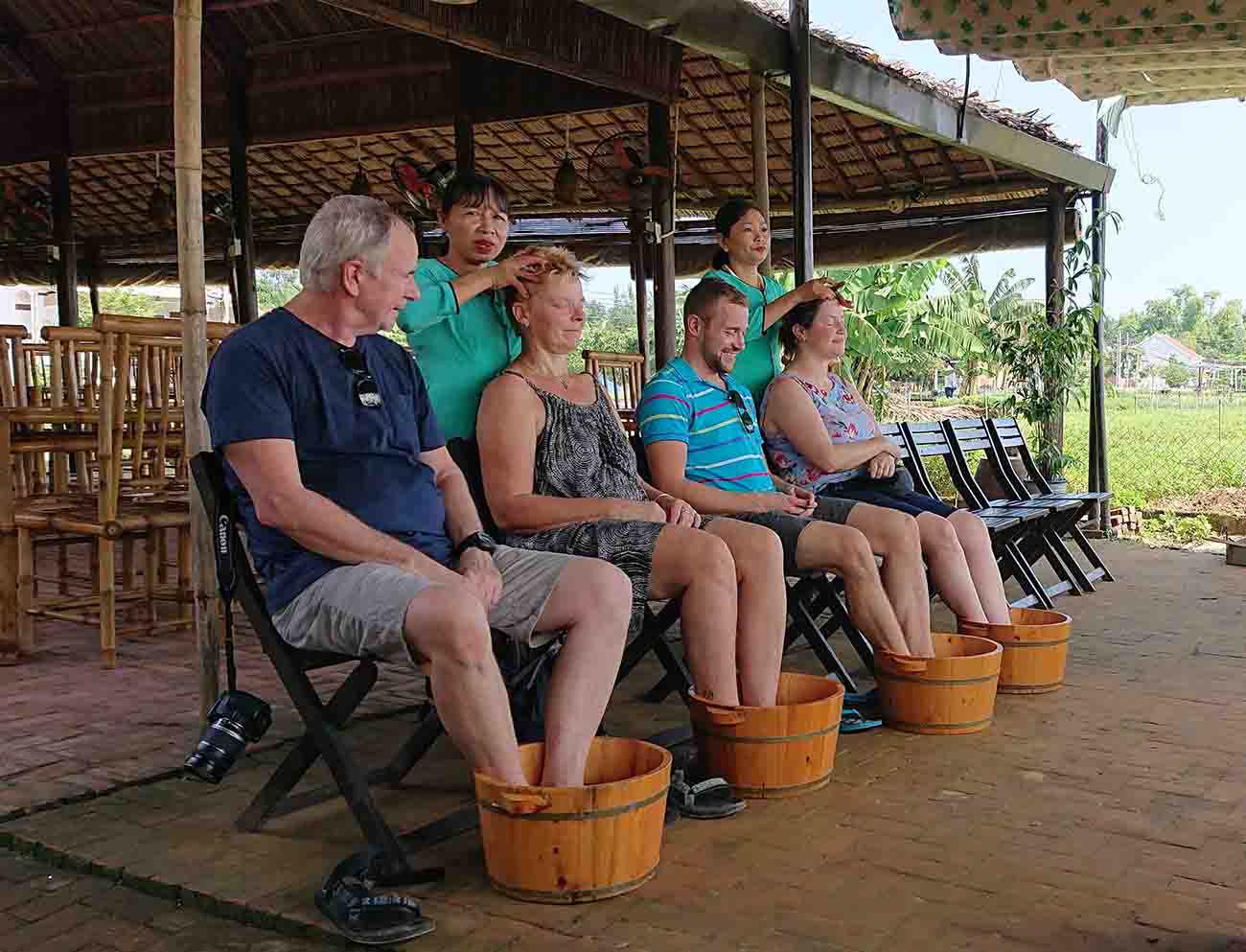
It feels very different from Hoi An Ancient Town. There are no grand monuments or polished tourist attractions here. Instead, you will find vegetable gardens, herb beds, quiet village roads, rice fields, and farmers working in the fields.
The village is pleasant to walk or cycle through, but the visit becomes more interesting when you do more than just look around. Joining a farming activity, trying local food, or spending time in the gardens gives you a better sense of what Tra Que is actually about.
Who Will Enjoy Tra Que Most?
Tra Que is a good fit if you enjoy:
- Cycling through the countryside
- Learning where local ingredients come from
- Vietnamese food and cooking
- Hands-on farming activities
- Photography
- Rural scenery
- Spending a few hours outside central Hoi An
Cycling from Hoi An also adds something to the trip. The route passes rice fields, farmland, and local neighborhoods before reaching the village.
Food is another good reason to come. Once you see how the herbs are grown, dishes such as tam huu, banh xeo, mi Quang, and cao lau make a little more sense.
When I Would Skip It
I wouldn’t prioritize Tra Que if you have less than one full day in Hoi An.
With very limited time, Hoi An Ancient Town will probably deserve more attention.
The village may also feel underwhelming if you have no interest in farming, food, or rural life. This is still primarily an agricultural community, not a large tourist attraction with entertainment facilities and shops around every corner.
Weather matters as well.
The open fields can become uncomfortable in extreme heat, while heavy rain can leave paths wet, muddy, and difficult to explore.
Is It Worth Visiting Without an Activity?
You can visit Tra Que independently, but simply walking through the vegetable gardens may feel a little limited.
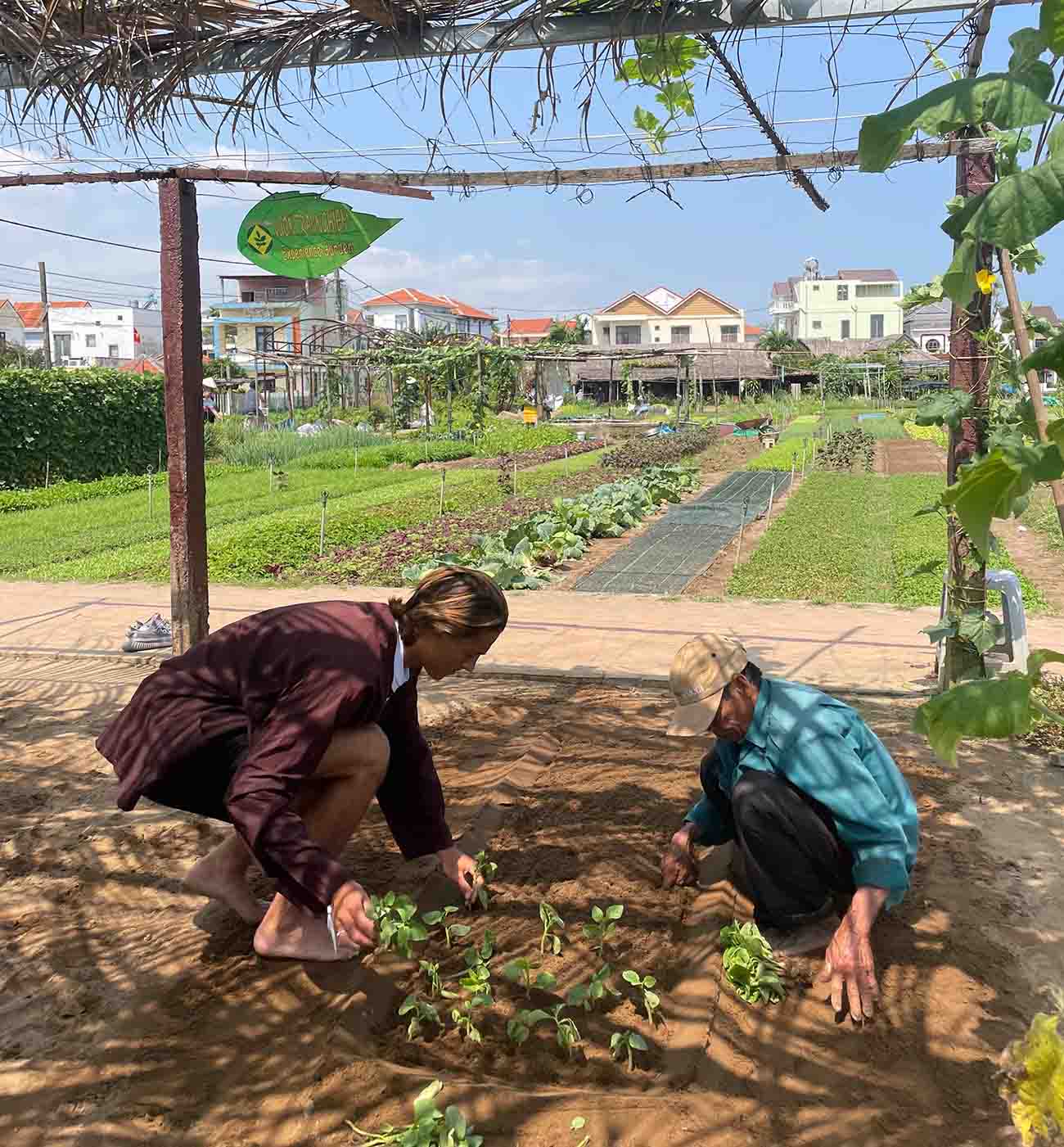
The village is more interesting when you spend some time learning how the farming here connects with local food. A cycling trip, farming activity, gardening session, or cooking class gives you something to take part in rather than just passing through for photos.
If all you want is a quick look at green fields, Tra Que may not be an essential stop. But if you are curious about how vegetables and herbs are grown around Hoi An, or you want a few hours of cycling, cooking, or hands-on farming outside the town center, Tra Que Vegetable Village is well worth visiting.
What Makes Tra Que Vegetable Village Special?
Tra Que Vegetable Village is more than a photogenic patch of countryside outside Hoi An. It is still a working farming community, where vegetables and herbs are grown using methods that have been passed down through generations.
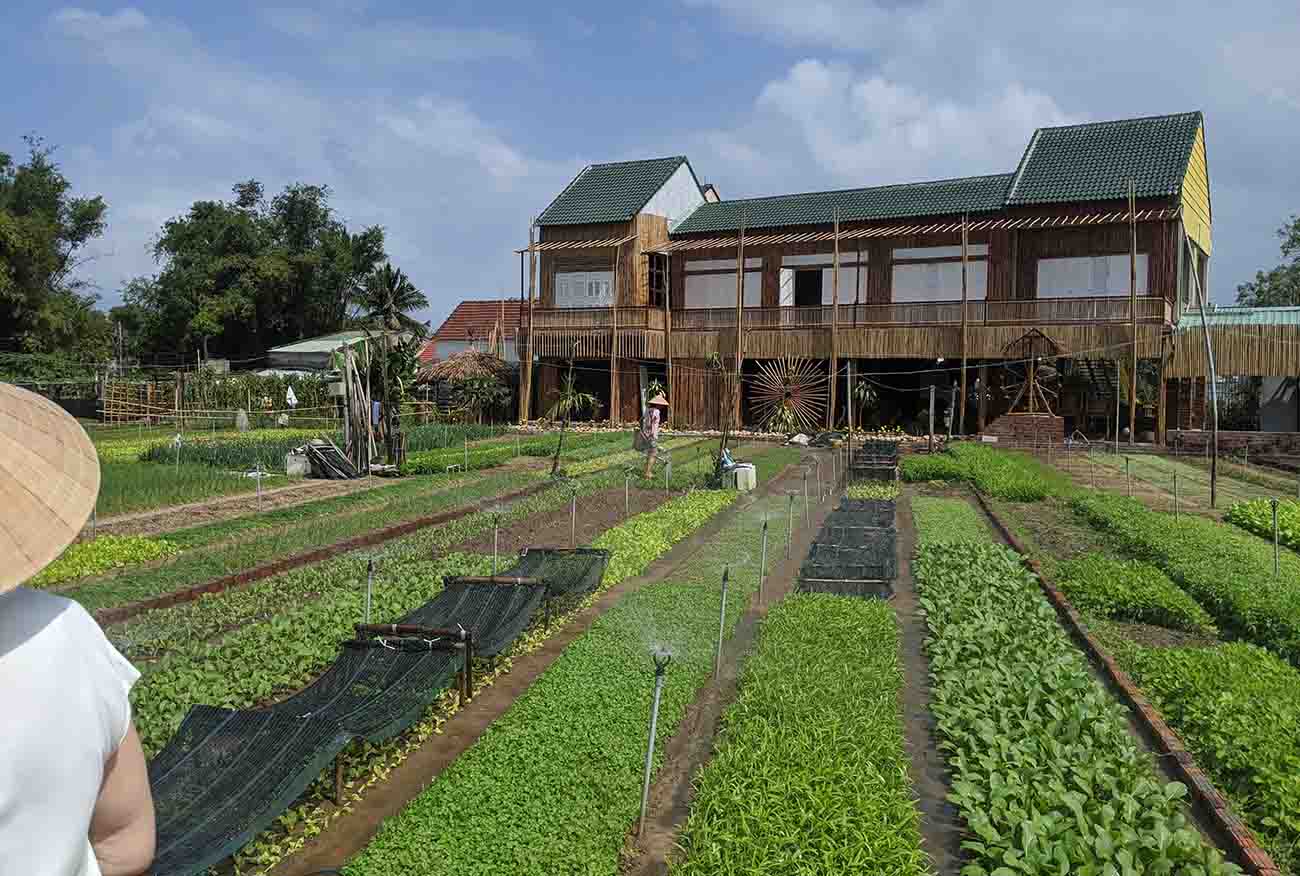
The village has a history of more than 400 years, and farming remains closely tied to daily life here. The produce grown in Tra Que also plays an important role in Hoi An’s local food, which is one reason the village is more interesting than it may first appear from the road.
A Working Farming Village
More than 200 households are involved in growing vegetables and herbs in Tra Que.
The village produces around 50 varieties of leafy vegetables and herbs, including basil, coriander, mint, perilla, and fish mint.
These crops are used widely in Hoi An cooking.
There is also a traditional story behind the name Tra Que.
According to local tradition, King Gia Long visited the area and noticed a herb with an aroma that reminded him of tea (tra) and cinnamon (que). The village later became known by that name.
Traditional Farming Methods
One of the most distinctive parts of Tra Que is the way the soil is prepared and fertilized.
Farmers traditionally avoid synthetic chemical fertilizers and industrial pesticides.
Instead, river seaweed collected from nearby waterways is worked into the soil as a natural fertilizer.
The vegetable beds themselves require a lot of preparation by hand, which is also why visitors should remain on the paths.
Don’t step onto the raised beds.
Compacting the soil can damage the carefully prepared ground and young plants.
Cultural Recognition
Tra Que’s farming tradition has received both national and international recognition.
In 2022, its vegetable-growing practices were recognized by Vietnam’s Ministry of Culture, Sports and Tourism as part of the country’s National Intangible Cultural Heritage.
In 2024, Tra Que was named one of UN Tourism’s Best Tourism Villages.
The recognition is significant, but what matters most when you are actually there is that the farming tradition is still being practiced rather than simply displayed.
Best Things to Do in Tra Que Vegetable Village
You can visit Tra Que independently or build the trip around a more hands-on activity.
Walk or Cycle Through the Gardens
This is the easiest option.
Paths run between the vegetable beds, making the village straightforward to explore without a guide.
Along the way you can see:
- Vegetable and herb gardens
- Irrigation channels
- Traditional water wheels
- Farmers tending crops
- Small shrines connected with local farming traditions
A casual self-guided visit usually takes around 1 – 2 hours.
If you have cycled from Hoi An, keeping the bicycle with you also makes it easy to continue through the surrounding area rather than limiting yourself to one small section of the village.
Try Traditional Farming Activities
A farming activity gives you a much better sense of the physical work behind those neat rows of vegetables.
Depending on the season and the experience you book, activities may include:
- Preparing the soil
- Planting seedlings
- Carrying seaweed
- Watering crops
- Harvesting herbs
The activity you will probably see photographed most often is watering the gardens using a bamboo shoulder yoke with two metal watering cans.
It looks fairly straightforward when an experienced farmer does it.
Try balancing the weight and spreading the water evenly yourself and it quickly becomes obvious that it takes practice.
Exact activities depend on the season, time of day, and provider.
Simply buying an entrance ticket does not mean farming equipment and guided activities will automatically be available.
Join a Tra Que Cooking Class
A cooking class connects the gardens with the food much more directly.
Classes commonly begin with a walk through Tra Que, where a host or chef introduces some of the herbs grown in the village.
You may learn to recognize different varieties of basil, mint, coriander, and other greens before moving into the kitchen.
From there, you prepare several local dishes and finish by eating what you have cooked.
Before booking, check:
- Total duration
- Group size
- Menu
- Vegetarian options
- Allergy requirements
- Hotel transfers
- Whether farming activities are included
Classes vary considerably.
Some last around 2 hours, while more complete farming-and-cooking experiences can take 4 – 5 hours.
Check what is included instead of choosing only by price.
Try Dishes Made with Tra Que Herbs
Seeing the gardens is one thing. Eating the herbs is where the connection becomes much clearer.
Tam Huu
Tam huu, meaning “Three Friends,” is closely associated with Tra Que.
It combines shrimp, pork, and basil tied together with a softened scallion stalk and served with a sweet, sour, garlic-chili fish sauce.
The dish is small, but the fresh herb is part of the bite rather than something added afterward for decoration.
Banh Xeo
Banh xeo is a crispy rice-flour pancake filled with pork, shrimp, and bean sprouts.
Pieces of pancake are usually wrapped with plenty of fresh herbs and rice paper before being dipped in sauce.
Here the herbs help balance the richer fried batter.
Mi Quang
Mi Quang is one of Quang Nam’s best-known noodle dishes.
Thick rice noodles, concentrated broth, pork or shrimp, and peanuts are served with plenty of fresh greens.
The herbs add crunch, freshness, and aroma to the bowl.
Cao Lau
Cao lau is closely associated with Hoi An.
The dish combines chewy noodles, pork, savory sauce, and a generous amount of local herbs.
The greens are mixed into the bowl rather than treated as a separate salad.
If food is one of the reasons you are interested in Tra Que, try at least one of these dishes while you are in Hoi An.
Best Time to Visit Tra Que
Early morning and late afternoon are the best times to visit Tra Que Vegetable Village.
Most of the gardens are exposed to the sun, so timing makes a real difference.
Early Morning: 7:00 AM to 9:00 AM
This would be my first choice.
The temperature is easier to handle, and you have a better chance of seeing farming activity before the day becomes too hot.
Depending on the work being done, you may see farmers preparing soil, watering crops, or working with seaweed fertilizer.
It is also the most comfortable period for cycling from Hoi An.
Late Afternoon: After 3:30 PM
Late afternoon is the other good option.
The temperature starts to fall and the light becomes softer across the gardens.
It also works well if you want to continue to An Bang Beach afterward.
Avoid Midday During Hot Weather
Between roughly 11:00 AM and 2:00 PM, the open fields can become very uncomfortable.
This is particularly noticeable during the hotter months when you are walking, cycling, or doing physical farming activities.
Weather Matters
From May to August, temperatures around Hoi An can exceed 35°C (95°F).
Humidity makes physical activities feel harder.
From October to December, heavy rain and localized flooding may affect Tra Que. Paths can become wet or muddy and low-lying fields may become waterlogged.
Check the weather before leaving Hoi An, particularly if you are cycling.
Also, don’t assume that farmers will always be working when you arrive.
Tra Que is a real agricultural village. Work depends on the crop cycle, weather, and what needs to be done that day.
A quiet field is not necessarily an empty tourist experience; it simply means farming does not operate according to a visitor timetable.
- Also read: Best time to visit Hoi An
How to Get to Tra Que Vegetable Village
Tra Que is about 3 km northeast of Hoi An Ancient Town.
That makes it easy to reach by bicycle, motorbike, Grab, taxi, or even on foot.
From Hoi An Ancient Town
By Bicycle
When the weather is comfortable, cycling is my preferred option.
The trip takes around 15 – 20 minutes, and the route is mostly flat.
Much of the journey follows Hai Ba Trung Street, with sections passing rice fields before reaching Tra Que.
You don’t need to be an experienced cyclist, but pay attention at larger intersections where scooter traffic is heavier.
Bicycle parking is available near the village entrances, generally for around 20,000 VND. Some restaurants may offer free parking to customers.
By Motorbike
A motorbike takes under 10 minutes from Hoi An.
It is convenient during hotter weather and useful if you already feel comfortable riding in Vietnam.
Motorbike access is restricted along some smaller paths within the farming area, so park outside and explore the gardens on foot.
By Taxi or Grab
Taxi or Grab makes more sense for:
- Families with young children
- Groups
- Very hot days
- Rainy weather
- Anyone who does not want to cycle
The journey is short and you can be dropped near the village entrance.
Walking
Walking from Hoi An Ancient Town takes roughly 40 – 45 minutes.
It is possible, but not an option I would choose in strong heat.
Parts of the route have limited shade, and you still have plenty of walking to do once you reach the gardens.
From Da Nang
Tra Que is approximately 20 – 25 km from Da Nang.
Travel by private car, taxi, or motorbike generally takes around 30 – 45 minutes.
If you are based in Da Nang, I would combine the village with Hoi An Ancient Town or An Bang Beach rather than traveling all that way just for a short walk around the gardens.
That turns the journey into a much better half-day or full-day outing.
Self-Guided Visit or Guided Experience?
Neither is automatically better.
It depends on what you want from Tra Que.
| Option | Best For | What You Get | Keep in Mind |
|---|---|---|---|
| Self-guided | Cyclists, photographers, independent travelers | Freedom to explore the gardens at your own pace | Limited explanation and normally no hands-on farming |
| Farming experience | Families, culture-focused travelers | Local guidance and practical farming activities | Activities change with season and provider |
| Cooking class | Food-focused travelers | Garden visit, cooking instruction, meal | More expensive and may take 4 – 5 hours |
Self-Guided Visit
You do not need a tour simply to see Tra Que.
Arrive, park, pay the 35,000 VND entrance fee, and explore the paths independently.
This works well if cycling, photography, and seeing the gardens are your priorities.
The limitation is context.
You will learn much less about the farming techniques unless you research them yourself or join an activity.
Farming Experience
Choose this if you actually want to participate.
Depending on what is available, you may prepare soil, plant vegetables, water crops, or use traditional farming equipment.
Families may find this version particularly engaging because there is something to do rather than only something to look at.
Cooking Class
For travelers mainly interested in food, this is probably the most complete way to experience Tra Que.
You see the gardens, learn about the ingredients, cook, and finish with a meal.
Allow enough time.
A full cooking experience can take 4 – 5 hours, so don’t squeeze it between several other attractions.
Do You Need to Book Ahead?
Not for a normal self-guided visit.
For farming activities and cooking classes, advance booking makes more sense.
Booking around 24 – 48 hours ahead gives the host more time to prepare and gives you a better chance of getting the session you want.
Suggested Half-Day Tra Que Itinerary
There are two simple ways I would structure the trip.
Option 1: Independent Morning
Leave Hoi An by bicycle around 7:00 AM.
The weather is cooler and there is a better chance of seeing farmers working.
After arriving, walk or cycle around the gardens and spend some time looking at how the vegetable beds and irrigation system are organized.
Stop for a drink or simple local meal before leaving.
From there, either return to Hoi An Ancient Town or continue toward An Bang Beach.
This version is flexible and works well if you mainly want cycling, scenery, and photography.
Option 2: Farming and Cooking Experience
A guided version often begins around 8:00 AM.
Start with a walk through the gardens and learn about the herbs and the traditional use of river seaweed.
Depending on the season and provider, you may then join farming activities such as preparing soil or watering the beds with a bamboo shoulder yoke.
Afterward, move to the kitchen and prepare local dishes such as Tam Huu or Banh Xeo.
Most longer experiences finish around lunchtime, with a return to Hoi An at roughly 1:00 PM.
This is the option I would choose if understanding the relationship between the gardens and Hoi An food is the main reason for visiting.
Practical Tips for Visiting Tra Que
- Wear light clothing. The gardens are open and can become hot quickly.
- Use footwear that can get wet or muddy. Irrigation makes some paths damp or slippery.
- Bring sunscreen, a hat, water, and insect repellent.
- Carry Vietnamese Dong. It is useful for admission, parking, drinks, and small purchases.
- Stay off the vegetable beds. Walking on them can compact carefully prepared soil and damage plants.
- Don’t pick herbs without permission. They are crops, not free samples.
- Ask before taking close-up photos of farmers.
- Keep paths clear. Farmers still use them to carry tools, produce, water, and other equipment.
- Book cooking or farming activities ahead if they are important to your trip.
- Bring a reusable water bottle if possible.
If you plan to rent a motorbike, also check whether your travel insurance covers motorbike use.
Tra Que welcomes visitors, but it is still someone else’s workplace.
Treating it that way is a better rule than trying to memorize a long list of tourist etiquette.
Final Thoughts: Who Should Visit Tra Que?
Tra Que Vegetable Village suits travelers who enjoy local food, cycling, photography, farming, and spending some time away from the busier parts of Hoi An.
The village itself is simple. If you only walk in, take a few photos of the gardens, and leave, the visit may feel quite short.
It becomes more worthwhile when you spend a little more time there. You can cycle through the village, walk between the vegetable beds, watch how herbs are grown, or join a farming or cooking activity.
A self-guided visit works well if you mainly want to explore at your own pace. If you want more context, a farming activity or cooking class gives you a clearer idea of how the produce grown here connects with the food served around Hoi An.
Tra Que also works well as a half-day stop once you have already spent enough time in Hoi An Ancient Town. Since An Bang Beach is nearby, the two are easy to combine in the same day.