

Hue is one of the most rewarding places to explore in Central Vietnam. The Imperial City and royal tombs immediately show the city’s extraordinary imperial heritage, while local food, riverside walks, peaceful pagodas, and quiet neighborhoods reveal a softer side that makes Hue especially memorable.
As Vietnam’s former imperial capital, Hue has a character of its own. Nguyen Dynasty architecture, Buddhist culture, distinctive regional cuisine, and life along the Perfume River all come together in a city that feels rich in history and deeply connected to its traditions. It is the kind of place where spending a little more time makes the experience even better.
In this Hue travel guide, I’ll help you plan how long to stay, the best time to visit, where to stay, what to see and eat, how to get around, and how much to budget. I’ll also share what I think is most worth prioritizing so you can make the most of your time in Hue.
Is Hue Worth Visiting?
Hue is worth visiting if you want to understand more about Vietnam’s imperial history, culture, and local food.
The Imperial City and royal tombs are the main reasons many travelers come, but they are only part of the experience. Hue also has pagodas, riverside areas, distinctive regional food, traditional neighborhoods, and a slower atmosphere that gives the city its own character.
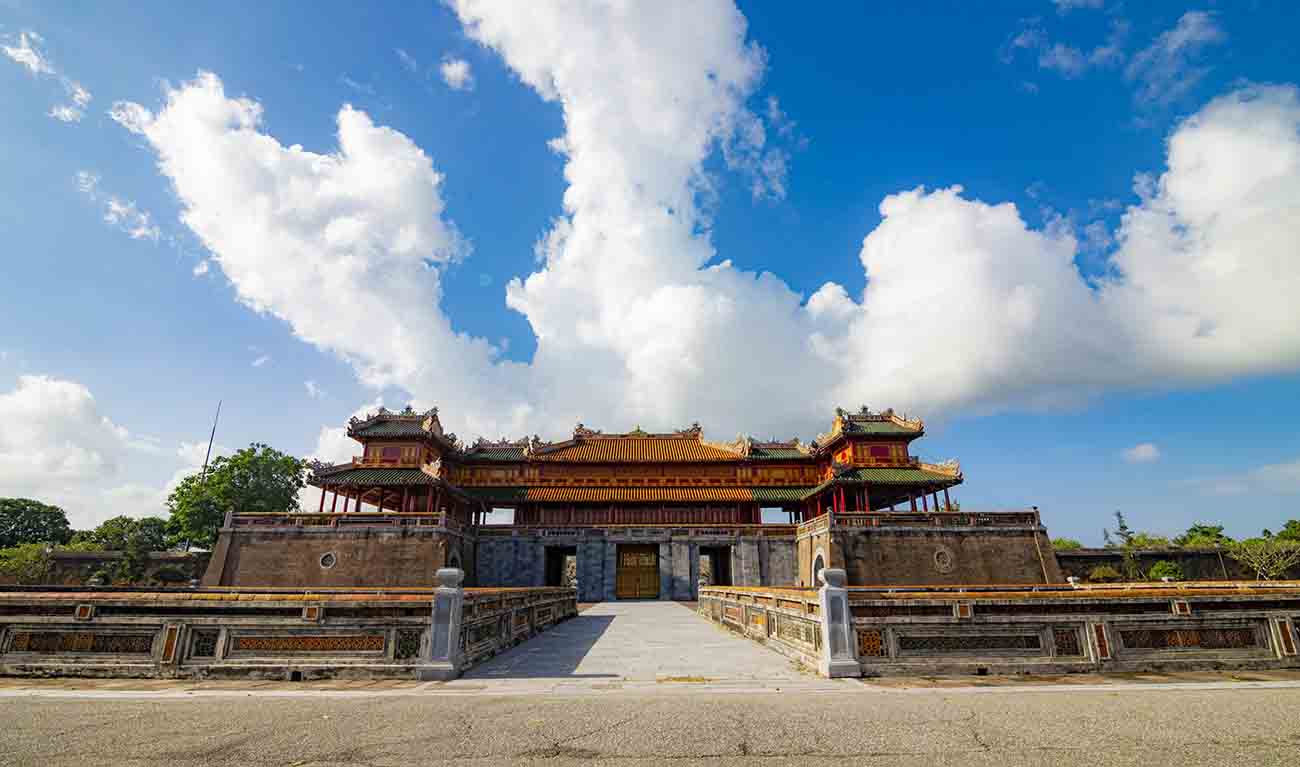
Hue is particularly rewarding if you enjoy Vietnamese history, Nguyen Dynasty architecture, temples and pagodas, local food, and slower travel.
The food alone deserves time. Hue dishes are often small, strongly seasoned, and influenced by both royal cuisine and everyday street food.
On the other hand, you may not need a long stay if beaches, nightlife, or fast-paced city experiences are your priorities.
Hue does have coastal areas such as Thuan An and Lang Co, but beaches are not its main strength compared with destinations such as Da Nang or Nha Trang.
Travelers with little interest in history may also start to find the temples and tombs repetitive if too many are packed into one itinerary.
For a first visit, I’d stay at least one night. If the itinerary allows, two days gives Hue much more room to make sense.
Hue at a Glance
| Detail | What to Know |
|---|---|
| Region | Central Vietnam |
| Best Known For | Imperial heritage, Nguyen Dynasty architecture, and Hue cuisine |
| Ideal Stay | Around 2 days for most first-time visitors |
| Main Attraction | Hue Imperial City |
| Other Highlights | Minh Mang Tomb, Tu Duc Tomb, Khai Dinh Tomb, Thien Mu Pagoda, Perfume River |
| Best For | History, food, culture, and slow travel |
| Getting Around | Walking in central areas, Grab/taxi, bicycle, private car for distant tombs |
| Nearby Destinations | Da Nang, Hoi An, Bach Ma National Park, DMZ sites |
How Many Days Should You Spend in Hue?
For most first-time visitors, two days is the sweet spot.
One day can cover the essentials. Three days gives you more room for countryside, lesser-visited sites, cafés, and food.
One Day in Hue
One day works if you are passing through, coming from Da Nang, or working with a very tight Central Vietnam itinerary.
Keep the plan simple:
- Hue Imperial City
- One royal tomb, usually Khai Dinh
- Thien Mu Pagoda
- One proper Hue meal
The Imperial City should be the priority, preferably earlier in the day before the heat becomes stronger.
One mistake I would avoid is trying to visit several royal tombs in the same day. They are spread across the countryside, and after a while the trip becomes more about moving between sites than actually enjoying them.
- Also read: Hue Day Trip from Da Nang
Two Days in Hue – My Recommendation
For a first visit, this is the amount of time I prefer.
It allows you to see the important historical sites while still having time for food, the river, and some slower moments.
Day 1
Keep the first day around central Hue.
Explore the Imperial City, visit Dong Ba Market, try dishes such as banh beo or banh loc, and spend some time walking beside the Perfume River.
In the evening, stay around central Hue and the pedestrian areas rather than adding another major attraction.
Day 2
Use the second day for the sites farther outside the center.
Visit one or two royal tombs such as Minh Mang and Khai Dinh, stop at Thien Mu Pagoda, then slow the afternoon down with a café, quieter neighborhood, or short river experience.
You will usually get more from two carefully chosen tombs than from trying to fit every imperial site into the trip.
- Also read: 2 Days in Hue
Three Days in Hue
A third day makes sense if you want to go beyond the main historical attractions.
You could cycle through the countryside, visit Thanh Toan Bridge, spend time at Tu Hieu Pagoda, or explore lesser-visited tombs such as Gia Long or Dong Khanh.
It also gives you more room for cafés, local food, and chè without having to fit every meal around sightseeing.
I wouldn’t completely rebuild the itinerary for three days. Keep the first two days similar and use the extra day for the quieter side of Hue.
Best Time to Visit Hue
Weather matters in Hue because many of its major attractions involve a lot of outdoor walking and relatively little shade. For most travelers, February to April is the easiest period for sightseeing.
February to April – Best for Comfortable Sightseeing
Temperatures are generally more comfortable before the stronger summer heat arrives.
This makes it easier to walk through the Imperial City, visit royal tombs, explore central Hue, and stay outdoors for longer periods.
Conditions are also generally more comfortable for photography and moving between large historical sites.
May to July – Hot and Humid
Hue can become very hot and humid during these months, with temperatures often exceeding 35°C (95°F).
The solution is not necessarily to avoid Hue, but to change the rhythm of the day.
Start major outdoor attractions early, ideally around 7:00 AM. Take a proper break between roughly 11:00 AM and 2:00 PM, carry enough water, and use sunscreen, a hat, or an umbrella.
I also wouldn’t schedule several large outdoor sites back-to-back.
A long lunch, café break, or some time back at the hotel can make a big difference during the hottest part of the day.
August to January – Wetter Period
Hue becomes wetter during this part of the year, with the heaviest monsoon conditions generally falling between September and December.
Rain may last much longer than a short afternoon shower.
Flooding can also affect Hue during wetter periods, particularly around October and November, when the Perfume River may rise and some roads or riverside areas can be disrupted.
The main rule during this season is simple: don’t make the itinerary too rigid.
What I Would Do on a Rainy Day in Hue
Heavy rain doesn’t automatically ruin a day in Hue.
The Imperial City has some covered corridors and indoor areas where you can take shelter, while the Hue Museum of Royal Antiquities offers another option.
Rain is also a good excuse for a longer local lunch or an unhurried café stop.
What I would avoid is heading to distant tombs in a serious downpour. Grounds around places such as Tu Duc and Minh Mang can become muddy and slippery, which takes much of the enjoyment out of the visit.
- Don’t miss: Best Time to Visit Hue
How to Get to Hue
Hue is well connected with other major destinations in Vietnam. The best way to arrive mostly depends on where you are coming from, how much time you have, and whether you value convenience or the journey itself.

Flying to Hue
Flying is the quickest choice from Hanoi or Ho Chi Minh City.
Flights arrive at Phu Bai International Airport (HUI), around 15 km south of central Hue.
The journey from the airport into the city normally takes about 30 – 40 minutes.
Airport taxis, Grab, and private transfers are all available.
If time is limited, flying is the practical option.
Da Nang to Hue
The journey between Da Nang and Hue is one of the more enjoyable transfers in Central Vietnam.

- The train is my pick when the journey is part of the experience. The route passes through the Hai Van Pass area and gives you wide coastal views along the way.
- A private car is the easiest option if you want door-to-door transport and the freedom to stop along the way.
- Shuttles and buses are cheaper and work well if you mainly want an efficient transfer.
- You can also travel by motorbike over the Hai Van Pass, but I would only recommend that to riders who already have solid experience. The mountain road has steep sections and traffic, so it is not somewhere to learn.
For most travelers, the decision is fairly simple: private car for convenience, train for scenery.
Hoi An to Hue
Hoi An does not have its own airport or railway station, so reaching Hue requires an overland transfer.
A private car is the most comfortable option and usually takes around 3 – 3.5 hours. It also allows you to travel through the Hai Van Pass and stop around Lang Co.
Shuttle and tourist buses are cheaper, although they generally focus on getting you to Hue rather than stopping for scenery.
Another option is to travel from Hoi An to Da Nang railway station and continue to Hue by train.
Hanoi or Ho Chi Minh City to Hue
For longer journeys, the main question is whether you want to save time or travel slowly.
A flight takes a little over an hour and is the fastest choice.
The Reunification Express takes around 14 hours from Hanoi and up to 20 hours from Ho Chi Minh City.
A sleeper train can make sense if you enjoy overland travel and don’t mind spending the night on the train.
Overnight sleeper buses are generally the cheapest overland option, but they also take a long time and are usually less comfortable than the train.
If I wanted to save time, I’d fly. If the journey itself mattered, I’d take the train.
Where to Stay in Hue
Where you stay can have a noticeable effect on how easy Hue feels to explore. The north bank of the Perfume River contains the Citadel and quieter residential areas. The south bank has more hotels, restaurants, cafés, and tourist services.
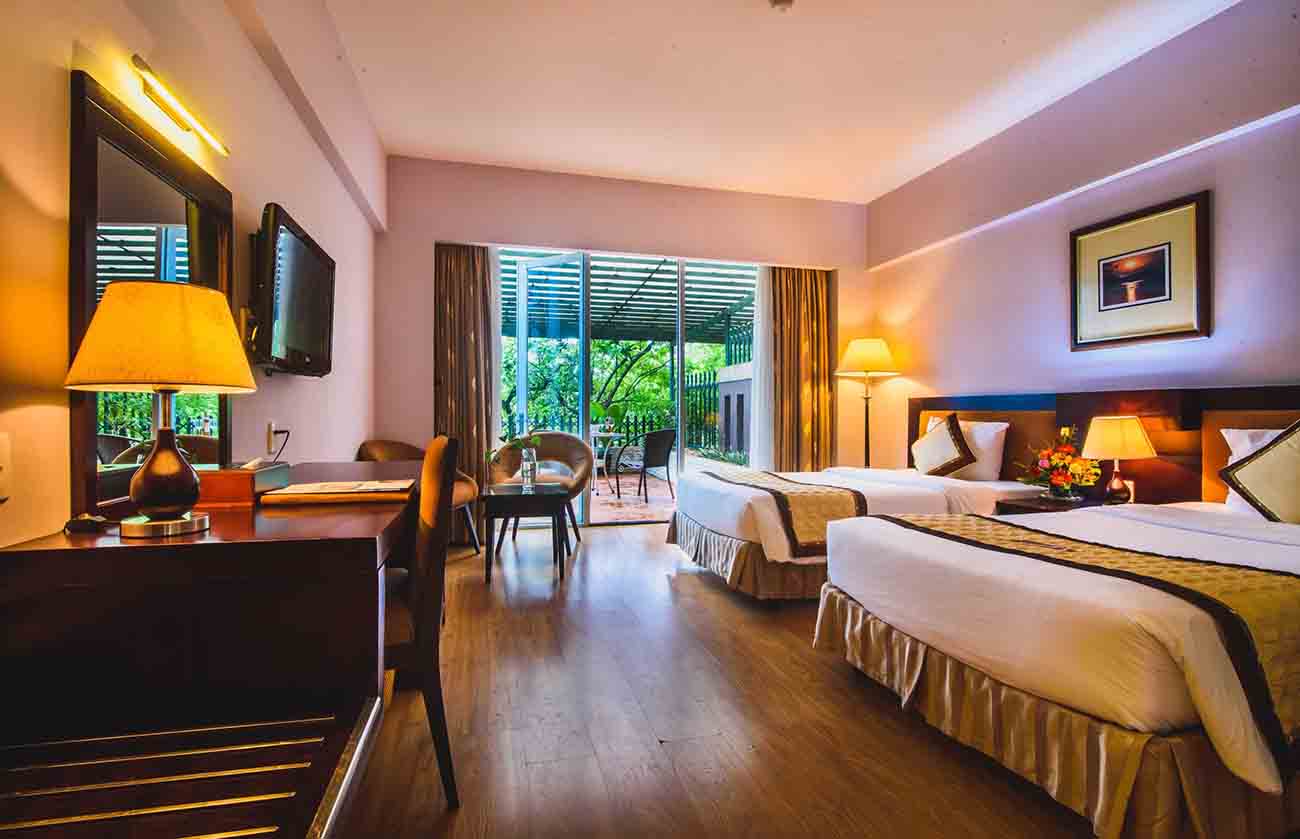
Central Hue – Best for First-Time Visitors
For most first-time visitors, Central Hue on the south bank is the easiest base.
Areas around Pham Ngu Lao, Chu Van An, and Le Loi put you close to restaurants, cafés, pedestrian areas, evening walks, Grab, and taxis.
That convenience matters on a short stay.
You can walk out of the hotel, find somewhere to eat, have a coffee, or take an evening stroll without organizing transport every time.
Near the Imperial City – Best for History Lovers
Staying on the north bank near the Imperial City is a better fit if history is the main focus of the trip.
You can walk to the Citadel early in the morning, and the surrounding residential streets and old garden houses are noticeably quieter.
The trade-off becomes more obvious at night.
There are fewer restaurants and very little nightlife, so you may end up taking a taxi across the river when you want more dining options.
Riverside Areas – Best for a Quieter Stay
Hotels and resorts along the Perfume River suit travelers who want more space and a calmer atmosphere.
They work particularly well for couples and longer stays.
Many riverside properties offer gardens, pools, and open river views, which can be very welcome after a hot morning spent walking around tombs and historical sites.
Where I Would Stay
For one or two nights, I’d choose Central Hue on the south bank.
It gives you the easiest combination of food, walking, evening activity, and transport.
For three days or longer, I’d be more tempted by a quieter riverside property. Once the sightseeing schedule becomes less compressed, having somewhere peaceful to return to starts to matter more.
- Also read: Where to Stay in Hue
Best Things to Do in Hue
Hue has more historical sites than most travelers realistically need to see on one trip. The mistake is trying to collect them all.
Spend proper time at the Imperial City, choose one or two royal tombs, then balance the history with the river, food, markets, pagodas, or countryside.
Explore the Hue Imperial City
The Hue Imperial City should be the first priority on a first visit.
For nearly 150 years, the Citadel was the political, military, and cultural center of the Nguyen Dynasty.
Parts of the complex were heavily damaged during the French and American wars, particularly during the 1968 Tet Offensive, but the surviving and restored structures still give you a strong sense of Hue’s imperial past.
The main thing many first-time visitors underestimate is the size.
Inside the fortified Citadel lies the Imperial City, with the former Forbidden Purple City deeper within the complex. There is a lot of ground to cover.
Allow at least 2 – 3 hours for a normal visit. If you are genuinely interested in the history and architecture, you could easily stay longer.
Going around 7:00 AM is worth the early start. The temperature is more manageable and larger tour groups tend to arrive later.
What I Would Prioritize Inside
If you don’t want to inspect every structure, focus on Ngo Mon Gate, the Thai Hoa Palace area, The To Mieu, and some of the imperial courtyards, historic gates, corridors, and gardens.
Ngo Mon is the grand southern entrance to the Imperial City.
Thai Hoa Palace is known for its lacquered timber columns, royal throne, and ceremonial architecture.
The To Mieu is the ancestral temple complex and home of the Nine Dynastic Urns.
Between the major structures, take some time in the restored corridors and quieter garden areas. You don’t need to move through the complex at full speed.
- Explore next: Hue Imperial City Guide
Visit One or Two Royal Tombs
You do not need to visit every royal tomb in Hue.
They are spread through the countryside, and the differences between them are easier to appreciate when you are not rushing.
Khai Dinh Tomb
Best for first-time visitors, short schedules, and dramatic architecture.
Khai Dinh is relatively compact, so it is easy to combine with other attractions.
Its design feels very different from the older tombs, mixing European influences with traditional Vietnamese elements.
The dark concrete exterior contrasts sharply with the colorful porcelain and glass decoration inside the main palace.
If I had time for only one royal tomb, Khai Dinh would be the easiest choice.
Minh Mang Tomb
Best for traditional architecture, landscaped grounds, and travelers who enjoy walking.
Minh Mang is much more expansive.
The complex follows a strong symmetrical layout, with gates, courtyards, pavilions, lakes, and pine-covered grounds arranged along a central axis.
Choose it if the relationship between architecture and landscape interests you as much as the buildings themselves.
Tu Duc Tomb
Best for gardens, a quieter atmosphere, and slower sightseeing.
Tu Duc Tomb originally served as a retreat for the emperor before his death.
Its lake, pavilions, gardens, and scattered structures create a softer and less rigid layout than Minh Mang.
It is the one I would consider when the aim is to slow the day down rather than fit in another dramatic monument.
Which Royal Tomb Should You Choose?
If you only have time for one, choose Khai Dinh for its compact size and distinctive architecture.
If you want to see two, combine Khai Dinh with Minh Mang or Tu Duc.
That contrast is much more interesting than simply visiting multiple tombs because they happen to be nearby.
Travelers with more time and a stronger interest in history can also consider Gia Long or Dong Khanh.
Visit Thien Mu Pagoda
Thien Mu Pagoda sits on a hill overlooking the Perfume River and is one of Hue’s most recognizable religious sites.
The seven-story Phuoc Duyen Tower dominates the entrance, while the active monastery gives the site a different atmosphere from the imperial monuments.
The pagoda also displays the blue Austin car associated with monk Thich Quang Duc, who drove it to Saigon before his self-immolation in 1963.
Because this remains an active religious site, dress respectfully. Keep shoulders and knees covered and voices low.
Thien Mu is also easy to combine with the royal tombs as part of a half-day outside central Hue.
- Also read: Thien Mu Pagoda
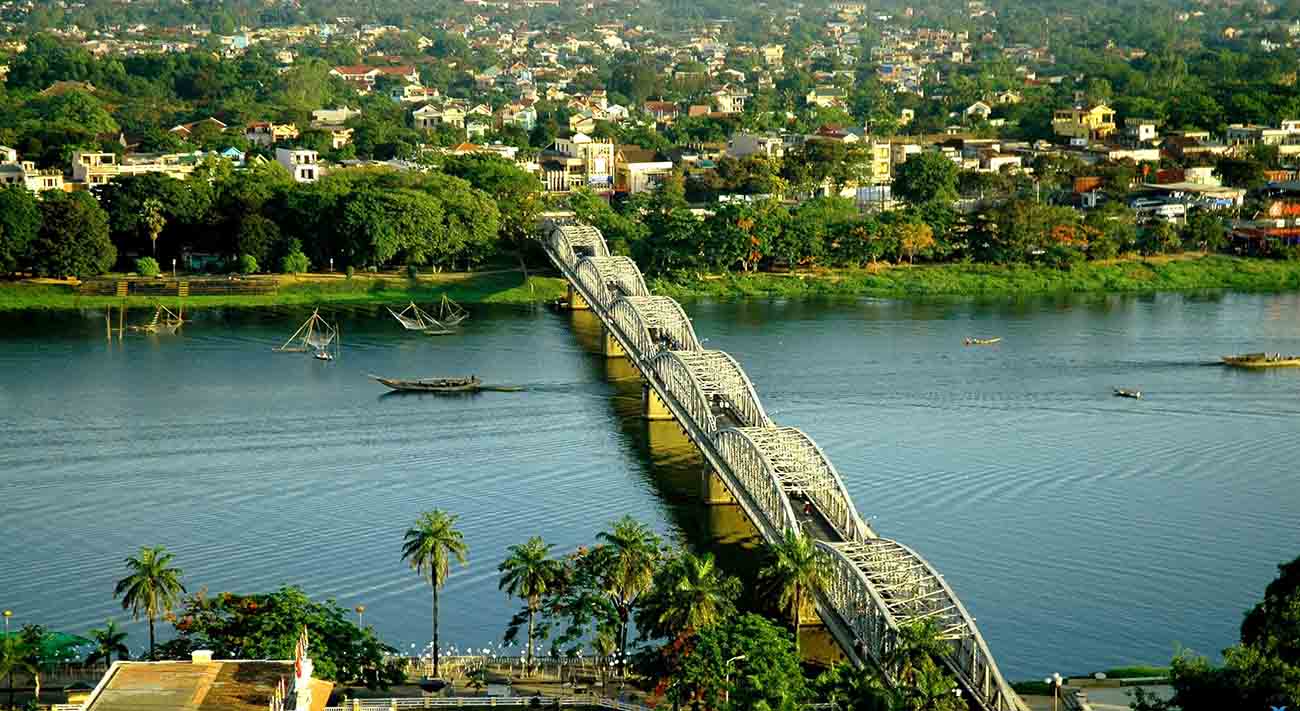
Walk Along the Perfume River
Some of my favorite parts of Hue don’t require a ticket.
A walk along the Perfume River is a simple way to experience the city between the major attractions.
The atmosphere changes throughout the day.
In the morning, locals exercise beside the water and rowers move across the river. By evening, Truong Tien Bridge lights up and the riverside becomes livelier.
The south bank also has pedestrian areas where you can walk away from motorbike traffic.
Even on a short trip, I would leave some time for this. The river helps make sense of Hue’s geography and gives you a break from temples, gates, and royal architecture.
Explore Dong Ba Market
Dong Ba Market shows a much more everyday side of Hue.
Come for local food stalls, fresh produce, traditional products, souvenirs, and the general rhythm of a working local market.
The inner aisles can be crowded, hot, and noisy.
Keep your belongings secure, ask prices before buying or eating, and expect some negotiation when buying non-food items.
Most importantly, don’t expect a polished tourist market.
Dong Ba is busy and imperfect because it still functions primarily as a local trading place. That is exactly what makes it interesting.
Visit Tu Hieu Pagoda
If you have more than one day and want somewhere quieter, Tu Hieu Pagoda is worth adding.
The pagoda sits among pine trees away from the busier sightseeing routes and is closely associated with Zen Master Thich Nhat Hanh.
You don’t need half a day here.
Around an hour gives you enough time to walk around the crescent-shaped lake, enjoy the setting, and see the graves of the royal eunuchs who historically supported the temple.
Explore Hue’s Countryside
Once you leave the historical center, Hue becomes noticeably quieter.
The surrounding countryside includes rice fields, villages, and places such as the Thanh Toan covered bridge, beside a small agricultural museum.
Cycling works well here because much of the surrounding terrain is flat.
I would save the countryside for a two- or three-day stay, after you have already seen the Imperial City and at least one royal tomb.
It gives you another side of Hue without adding another major monument to the list.
Take a Perfume River Boat Ride – If It Fits Your Trip
Traditional dragon boat rides are heavily associated with Hue, but I don’t consider them essential.
A boat gives you another perspective of the river and works well if you enjoy slow sightseeing.
There are trade-offs. The boats move slowly, and the engines can be noisy.
With only one day, I would put the Imperial City and one royal tomb ahead of a long river cruise.
With more time, a shorter boat ride can be a pleasant extra.
- Continue your journey: Best places to visit in Vietnam
What to Eat in Hue
Food is one of the strongest reasons to give Hue enough time.
Hue cuisine is known for small portions, strong seasoning, plenty of chili, and dishes influenced by both royal cooking and everyday local food.
You don’t need to work through a giant food checklist. Start with a few dishes that show different sides of the local cuisine.
Bun Bo Hue
Bun bo Hue is the obvious starting point.
The broth is built from beef and pork bones and flavored with lemongrass, chili oil, and fermented shrimp paste.
It is generally stronger and spicier than pho.
A local bowl may include thick round rice noodles, beef and pork, pig’s blood, banana blossom, and crab and pork meatballs.
What makes it worth trying here is the combination of the broth, noodles, and local toppings rather than simply the name of the dish.
Banh Beo, Banh Nam and Banh Loc
These three are ideal if you want something lighter and enjoy trying several things in one sitting.
Banh beo are small steamed rice cakes topped with dried shrimp, scallion oil, and crispy pork.
Banh nam are flat rice dumplings filled with minced pork and shrimp and steamed inside banana leaves.
Banh loc have a chewy, translucent tapioca wrapper with shrimp and pork inside.
Because the portions are small, local restaurants often serve them together.
For a first visit, a mixed platter is the simplest way to understand this side of Hue food without ordering too much.
Com Hen
Com hen is stronger, spicier, and a little more challenging.
It combines rice with small clams, crispy pork skin, peanuts, star fruit, herbs, fermented shrimp paste, and chili. Hot clam broth is normally served alongside it.
The fermented shrimp paste gives the dish a noticeably stronger aroma than many other Hue foods.
If bold flavors don’t bother you, this is one of the dishes I would make room for.
Banh Khoai
Banh khoai is a crispy rice-flour pancake filled with pork, shrimp, and bean sprouts.
It can look similar to banh xeo, but the dipping sauce makes the Hue version distinctive.
The pancake is commonly served with a thick sauce made from pork liver, peanuts, and sesame, together with fresh herbs and unripe fig.
The greens are important because the pancake itself is quite rich.
Try Hue Sweet Soups
Hue is also known for chè, or Vietnamese sweet soups.
There are many varieties, including lotus seed, mung bean, and taro.
Depending on the type and season, they may be served warm or with crushed ice.
After several spicy Hue dishes, chè is an easy dessert or afternoon break.
What I Would Eat on a First Day in Hue
I wouldn’t try to eat everything at once.
A simple first day could start with bun bo Hue for breakfast, followed by a mixed plate of banh beo, banh nam, and banh loc at lunch.
Have chè later in the day.
If you still want something with a more intense local flavor, add com hen.
There is always another meal. Hue food is more enjoyable when you leave enough room to be hungry again.
- Also read: What to Eat in Hue
How to Get Around Hue
Getting around Hue is fairly straightforward, but one form of transport will not suit every part of the city.
Central areas are walkable. The royal tombs are not.
For most first-time visitors, a combination of walking, Grab or taxi, and possibly a private car works well.
Walking
Walking is useful around Central Hue, the riverside, the immediate area surrounding the Imperial City, and for evening strolls.
It is not realistic for reaching the major royal tombs.
Sites such as Khai Dinh and Minh Mang are roughly 7 – 12 km from central Hue, and those distances become even less appealing in strong heat.
Grab and Taxi
For ordinary trips around Hue, Grab or a metered taxi is usually the easiest choice.
They are useful for crossing between the north and south banks, reaching restaurants, moving around the city, or visiting an individual royal tomb.
Grab and taxis such as Mai Linh are available around central Hue.
At more distant tombs, you may occasionally have to wait for a return ride. Some drivers will offer to wait for an agreed fee.
Bicycle
A bicycle suits travelers who enjoy exploring slowly.
Central Hue, riverside areas, and countryside routes toward places such as Thanh Toan Bridge work particularly well.
The important variable is weather.
Cycling can be enjoyable in cooler conditions and exhausting during the hottest, most humid months.
Motorbike
A motorbike gives you more independence, but this is something I would recommend only to experienced riders.
Hue traffic may feel calmer than Hanoi, but you still need to understand local traffic behavior.
Strong sun and monsoon rain can also make riding unpleasant.
Proper licensing and suitable insurance are important.
Parking at the major monuments is normally straightforward and costs around 5,000 VND per site.
Private Car with Driver
A private car is most useful when several attractions outside central Hue are being combined in one day.
It works particularly well for families, small groups, hot weather, rainy days, or a circuit involving several tombs.
You can move directly between attractions and return to air conditioning between visits.
One detail travelers sometimes misunderstand: a private driver is not automatically a tour guide.
Unless a guide has specifically been arranged, the driver generally waits while you explore the sites yourself.
Do You Need a Guided Tour?
Not necessarily.
A guide makes sense if you want more detailed historical context, only have one day, prefer a highly structured itinerary, or simply don’t want to organize the sightseeing yourself.
Historical information at some monuments can be limited, so good commentary may add a lot if history is one of your main reasons for visiting Hue.
If I had two days or more and wanted plenty of time for cafés, food, and wandering, I would be comfortable exploring independently.
If transport is the only concern, Grab, taxis, or a private driver are usually enough.
How Much Does It Cost to Visit Hue?
Hue remains fairly affordable across a wide range of travel styles.
Your main expenses will normally be accommodation, food, attraction tickets, and transport.
The figures below are useful as 2026 planning estimates, rather than a promise that every traveler will spend exactly the same amount.
Accommodation
Typical nightly prices are:
- Budget: $10 – 20 for hostels and basic guesthouses
- Mid-range: $35 – 70 for comfortable boutique hotels
- Higher-end: $120 – 250+ for riverside resorts and luxury heritage properties
For most first-time visitors who want comfort without moving into resort pricing, the mid-range category provides plenty of choice.
Food and Drinks
Local food is one of the easier parts of the budget to control.
Typical prices include:
- Bun bo Hue: 30,000 – 50,000 VND
- Banh beo, banh nam, banh loc meal: usually under 100,000 VND
- Local coffee: around 20,000 VND
- Specialty coffee: around 50,000 – 70,000 VND
- Western or upscale Vietnamese meal: around 200,000 – 500,000 VND
Eating mostly local food allows you to try plenty of Hue specialties without spending heavily.
Hue Attraction Tickets
| Site / Combo | Adult | Child 7 – 12 Years |
|---|---|---|
| Imperial City | 200,000 VND | 40,000 VND |
| Minh Mang, Tu Duc, or Khai Dinh Tomb | 150,000 VND | 30,000 VND |
| Gia Long Tomb | 150,000 VND | Free |
| Dong Khanh Tomb | 100,000 VND | Free |
| Combo 3 Sites: Citadel + 2 Major Tombs | 420,000 VND | 80,000 VND |
| Combo 4 Sites: Citadel + 3 Major Tombs | 530,000 VND | 100,000 VND |
| All-Site Heritage Pass – Valid 5 Days | 600,000 VND | 120,000 VND |
Combo tickets are valid for two days, so there is no reason to race through all the included sites in a single afternoon.
If the plan already includes the Imperial City and multiple tombs, compare the combination ticket with buying each entrance separately.
Local Transport
Typical transport costs include:
- Grab/taxi within the city: around 30,000 – 60,000 VND per short trip
- Grab round trip to a distant tomb: around 200,000 – 300,000 VND
- Bicycle: around 30,000 – 50,000 VND per day
- Motorbike: around 150,000 VND per day, plus fuel
- Private car with driver: around 800,000 – 1,200,000 VND for a half-day tomb circuit
For one distant tomb, Grab or a taxi may be sufficient.
When several sites are being combined, paying for a private car can start to make more sense for convenience.
Example Daily Budgets
| Travel Style | Typical Budget Per Person/Day | What It Can Cover |
|---|---|---|
| Budget | $25 – 40 | Guesthouse, local food, attraction tickets, bicycle or motorbike |
| Mid-range | $60 – 100 | Boutique hotel, combo ticket, Grab/taxis, cafés, local dining |
| Comfortable | $150+ | 4-star riverside hotel, private car, guided tours, upscale dining |
These are only planning ranges.
Hue can offer very good value, particularly if you stay in a reasonably priced hotel, eat local food, and choose attraction tickets based on what you genuinely want to see.
Best Day Trips from Hue
I wouldn’t plan a day trip before giving Hue itself at least one full day.
If the Imperial City, royal tombs, and main city sights are already covered, there are several options farther out.
Bach Ma National Park
Best for hiking, nature, and cooler mountain scenery.
Bach Ma lies south of Hue and offers trails, waterfalls, and wide coastal views.
Adult admission is around 60,000 VND.
Lang Co and Hai Van Pass
Best for coastal scenery or travelers continuing toward Da Nang.
Lang Co sits between the lagoon, beach, and Hai Van Pass, making it a natural stop for scenery and photography.
DMZ Sites
Best for travelers with a strong interest in modern history and the Vietnam War.
DMZ trips normally head north toward Dong Ha, with stops such as Vinh Moc Tunnels and Khe Sanh Combat Base.
Group tours are typically around $30 – 66 per person, while private tours range from roughly $120 – 180.
These excursions can be worthwhile, but I would still put Hue itself first.
Practical Hue Travel Tips
A few practical decisions can make Hue considerably easier to enjoy.
- Start outdoor sightseeing early in hot weather. Around 7:00 AM is much more comfortable than beginning in the middle of the day.
- Give the Imperial City enough time. It is larger than it looks on a map.
- Don’t visit every royal tomb. Choose the ones that genuinely interest you.
- Wear comfortable shoes. There is a lot of walking and plenty of uneven ground.
- Carry water, particularly at the Citadel and tombs.
- Dress respectfully at pagodas and religious sites. Shoulders and knees should be covered.
- Keep some Vietnamese cash. Smaller food stalls, markets, and vendors may not accept cards.
- Check opening hours before leaving. Major monuments generally operate from around 7:00 AM to 5:30 PM.
- Use Grab or a private car for distant tombs. Cycling is far less appealing in extreme heat.
- Keep rainy-season itineraries flexible. Cafés, museums, and longer meals give you useful alternatives.
- Leave gaps in the schedule. Hue is not a city where every hour needs an attraction attached to it.
- Treat food as part of the sightseeing. A proper local meal is worth making time for.
If you remember only one thing, make it this: quality over quantity.
I would much rather spend proper time at one royal tomb and then sit down for a long Hue lunch than race through three tombs simply because they were on a list.
Final Thoughts on Visiting Hue
Hue works best when you allow the city to set a slightly slower pace.
For a first visit, two days gives you enough room to understand the scale of the Imperial City, see one or two contrasting royal tombs, try the local food, visit Thien Mu Pagoda, and still have some time that is not attached to a ticket or timetable.
If I had to reduce Hue to five priorities, they would be simple: explore the Imperial City properly, choose one or two royal tombs, eat the local food, visit Thien Mu Pagoda, and leave some time for the Perfume River or quieter streets.
That last part matters.
Hue is not only interesting when you are standing in front of a palace or tomb. Some of its character comes through in the spaces between those places — over a meal, beside the river, or while walking somewhere with no real need to hurry.
That is the version of Hue I would recommend making time for.